Fondée en 2014, Hair World Turkey est une clinique de greffe de cheveux et d'esthétique médicale basée à Istanbul. Nous sommes entièrement agréés par le Ministère de la Santé pour réaliser une gamme de techniques de greffe et de restauration capillaires.
Résultats Garantis
Pas de pigistes
Autorisé
Assistance 24h/24 et 7j/7
Consultation Gratuit
Partenaire officiel du Manchester City Football Club
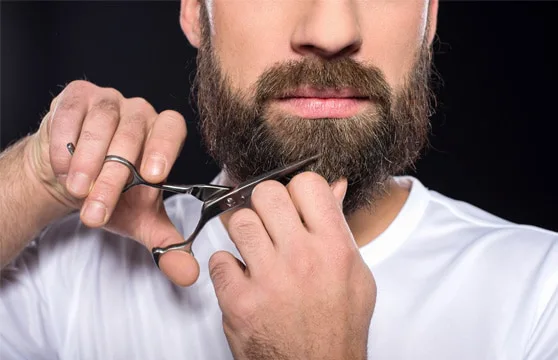
La greffe de barbe est le moyen le plus naturel et le plus permanent de gagner de nouveaux barbe pour les personnes qui subissent une perte de barbe permanente. La première période d'application de la greffe de barbe, qui a commencé à être appliquée au Japon dans les années 1930 pour la première fois, s'est déroulée dans les années 1950 en Occident. La greffe de barbe est une solution efficace et permanente pour les personnes souffrant de « calvitie masculine », une affection également connue sous le nom d'alopécie androgénétique. L'opération de greffe de barbe est le transfert des follicules pileux collectés de la région où les barbe sont denses vers la région où se produit la perte de barbe.
La greffe de barbe, qu'il est recommandé de faire avec un chirurgien expérimenté, doit être effectuée par des médecins spécialistes dans un hôpital entièrement équipé. La greffe de barbe est réalisée avec une intervention chirurgicale minimale plutôt qu'avec une chirurgie traditionnelle. Cependant, la greffe de barbe est également effectuée pour ceux qui perdent leur barbe en raison de diverses maladies et d'autres raisons. La perte de barbe peut survenir pour un certain nombre de raisons, notamment génétiques, médicales, psychologiques et traumatiques. Les hommes peuvent être affectés par la calvitie. Nos poils faciaux comme la barbe, les sourcils et les cils sont également à risque. Le problème de perte de barbe peut nuire à l'image de soi d'une personne et entraîner des problèmes psychologiques. Alors que dans certains cas, ce n'est que temporaire, dans la plupart des cas, la perte de barbe est permanente. Elle est également irréversible par les méthodes traditionnelles qui utilisent la médecine. Heureusement, il existe une solution pour la calvitie. La greffe de barbe est une méthode de traitement fiable qui peut être appliquée pour éliminer définitivement les effets du problème de perte de barbe avec un taux de réussite supérieur à 95 %. Diverses techniques de greffe de cheveux/barbe sont utilisées en Turquie depuis plus de 40 ans. La technique la plus récente et actuellement la plus efficace, un processus connu sous le nom d'extraction d'unités folliculaires (FUE) a été développée dans les années 1990. La technique d'extraction d'unités folliculaires (FUE) est à la fois extrêmement raffinée et largement adaptée en Turquie.
Une greffe de barbe consiste à prélever des barbe sains ailleurs sur le corps et à les implanter directement sur le visage, le menton et le cou. Il est effectué lorsque quelqu'un n'est pas satisfait de la façon dont ses poils faciaux apparaissent. Par exemple, il pourrait être inégal ou mince, ou même incapable de se développer du tout. Les résultats deviennent visibles quelques semaines après la procédure et peuvent aider les hommes incapables de faire pousser une barbe et/ou une moustache épaisses et touffues d'une autre manière. Lorsqu'une greffe de barbe ou de poils faciaux est effectuée par un chirurgien expérimenté dans une clinique réputée, les résultats sembleront naturels et la récupération sera simple.
Combien coûte une Greffe de Barbe en Turquie ?
Les chiffres peuvent varier en ce qui concerne les coûts de greffe de barbe. Le montant final dépendra de la gravité du problème et du nombre de séances nécessaires pour terminer le processus. Il existe également d'autres facteurs à prendre en compte lors du calcul des coûts de greffe de barbe en Turquie. Ceux-ci comprennent l'hébergement à l'hôtel avant et après la chirurgie, les billets d'avion, les taxis vers et depuis l'aéroport et les frais de subsistance généraux tels que la nourriture et les boissons et tout médicament qui vous est prescrit si cela n'est pas couvert par les frais de chirurgie. Pour une meilleure idée, des calculateurs de coûts en ligne sont disponibles. Ou vous pouvez demander à votre équipe chirurgicale une ventilation financière complète, ainsi que des détails sur les options de paiement flexibles.
Comment se déroule une Greffe de Barbe ?
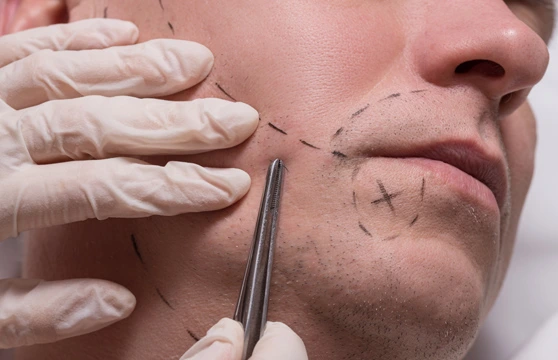
Tout d'abord, le chirurgien choisit la zone la plus efficace pour extraire les poils donneurs pour l'opération de la barbe. Cela peut souvent être le long de l'arrière des barbe, des côtés ou de la nuque. Les poils sont ensuite transplantés dans les zones requises en utilisant une technique de greffe de barbe pour obtenir un résultat naturel et efficace. La procédure est réalisée sous anesthésie locale pour réduire l'inconfort et accélérer les temps de récupération. La procédure peut prendre des temps différents, selon les zones à traiter et la taille de la barbe, du bouc ou de la moustache requise. Par la suite, l'équipe de transplantation surveillera le rétablissement du patient, planifiera un certain nombre de rendez-vous de suivi et fournira des instructions de suivi.
12:45
FUE Hair Transplant Experience with HWT Clinic
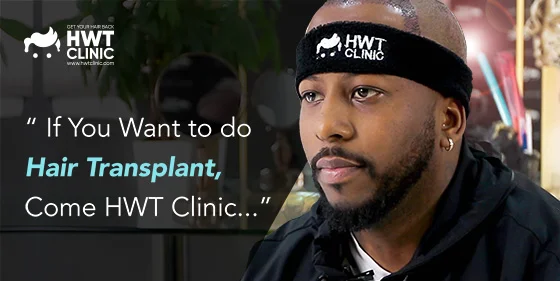
If you want to do hair transplant, come here like this is the top place to come do your work as you can see they did an amazing job. 'Shamel K.' from New York.
Would you like to listen about Hair Transplant at HWT Clinic from Benjamin?
Our video where Ben describes his process, experience and thoughts with pleasure about HWT Clinic is on the air.
MÉTHODES•
Méthodes de Greffe de Barbe
Technique FUE
La chirurgie de greffe de barbe en Turquie consiste à prélever des barbe individuels d'une zone donneuse saine du corps et à les transplanter, un par un, dans la zone cible. Il s'agit d'un moyen minutieux mais très efficace de s'assurer que les barbe transplantés ont un aspect naturel et couvrent toutes les zones requises. Chaque poil peut également être placé exactement au bon angle, pour favoriser une stimulation saine des follicules pileux sous la peau. La greffe de barbe peut être réalisée sous anesthésie locale pour un minimum d'inconfort. C'est une procédure courante qui a produit d'excellents résultats pour les hommes de tous âges et de toutes origines ethniques.
Technique FUT
La technique de greffe de barbe FUT commence par identifier une zone du corps où des barbe sains poussent encore. Cela peut souvent être la nuque ou quelque part sur le dos ou les côtés du cuir chevelu. Une bande de peau contenant plusieurs follicules pileux est ensuite extraite sous anesthésie locale. Celui-ci est implanté dans la zone des barbe, placé de manière à ce que les résultats paraissent naturels et aient les meilleures chances de succès. Après un court instant, les barbe implantés tomberont - c'est tout à fait normal. Cette étape est suivie par des follicules pileux nouvellement stimulés produisant des barbe qui formeront les barbe permanents du patient. Des instructions complètes de suivi seront fournies et le patient sera invité à revenir pour un rendez-vous de suivi afin de vérifier son rétablissement et ses progrès.
Technique DHI
Une greffe de barbe DHI fonctionne en extrayant des barbe individuels d'une zone donneuse saine, de la même manière que la technique de greffe de barbe FUE. Les poils sont placés, un par un, dans un outil spécial. Ceci est utilisé pour positionner soigneusement chacun au bon endroit sur le menton, le cou ou le visage. Cette méthode garantit des résultats extrêmement précis, qui semblent naturels et donnent les meilleures chances de réussite de la greffe de barbe. Elle est réalisée sous anesthésie locale dans des conditions chirurgicales complètes. Cela permet de minimiser l'inconfort et d'encourager une récupération rapide et simple. La chirurgie de greffe de barbe DHI se fait normalement en une ou deux séances, selon la gravité du problème et la zone à traiter.
Les premiers mois seront les plus importants en termes de récupération. Lorsque vous commencez à vous laver les barbe après quelques jours, gardez votre cuir chevelu exempt de produits capillaires agressifs tels que les teintures, les permanentes ou l'eau de Javel. Utilisez un shampooing doux, puis séchez-le avec une serviette ou laissez-le sécher naturellement plutôt que d'utiliser un sèche-barbe ou une baguette de coiffage. Si vous ressentez une rougeur, un gonflement, une irritation ou une infection prolongés, demandez immédiatement l'aide de votre chirurgien ou d'un autre professionnel de la santé. Vous verrez les barbe implantés tomber après quelques semaines - c'est tout à fait normal et une partie essentielle du processus.
02
Après 1 an
Même après 12 mois, vous devrez toujours traiter soigneusement vos nouveaux barbe pour vous assurer que la repousse des barbe se poursuit et que la zone ne s'infecte pas ou ne fait pas mal. À présent, vos barbe devraient être visiblement plus épais et plus volumineux et les résultats peuvent continuer à s'améliorer jusqu'à 18 mois après l'opération. Maintenez une routine de toilettage complète et demandez à votre barbier ou à votre coiffeur ses recommandations concernant les barbe et les produits de soins capillaires. Vous pouvez toujours être invité à assister à des rendez-vous de suivi ou à discuter de vos progrès avec votre équipe chirurgicale. C'est toujours une bonne idée car cela vous donne la possibilité de poser toutes les questions que vous pourriez avoir et de discuter de vos progrès.
03
Comment se laver les barbe après une Greffe de barbe
Ne vous lavez pas du tout les barbe dans les premiers jours suivant votre chirurgie. Lorsque vous reprenez votre routine de toilettage personnelle, lavez-vous d'abord à l'eau tiède pour éviter d'arracher les poils implantés. Tapotez doucement vos barbe avec une serviette pour les sécher et évitez de trop les peigner ou de les brosser au début. Après quelques semaines, vous pouvez passer à un shampooing doux. Nous pouvons vous recommander des produits capillaires adaptés ou vous pouvez demander conseil à votre coiffeur. Évitez d'utiliser un sèche-barbe, ou du moins utilisez-le sur le réglage le plus bas, encore une fois pour éviter d'endommager ou de brûler les nouveaux barbe implantés. Il en va de même pour les colorants, les plages ou d'autres produits coiffants agressifs - évitez-les pendant les étapes de récupération pour obtenir les meilleurs résultats possibles.
04
Avantages de la Greffe de Barbe
Pour de nombreux hommes, avoir une chevelure pleine et saine fait partie intégrante de leur identité. Il donne aux hommes la confiance en soi et l'estime de soi, que les plaques d'amincissement ou la perte de barbe peuvent sérieusement affecter. La perte de barbe chez les hommes peut être facilement perceptible et peut faire baisser la confiance. Pouvoir implanter des barbe à partir d'un site donneur sain dans le cadre d'une procédure simple et sans douleur est un excellent moyen de stimuler la croissance de nouveaux barbe et de restaurer les zones d'amincissement du cuir chevelu. La procédure peut être effectuée en seulement une ou deux séances sans avoir besoin de passer la nuit. La récupération est également relativement rapide, tant que les instructions de suivi fournies par la clinique sont suivies attentivement.
Qui est un bon candidat pour une Greffe de Barbe ?
Si vous avez des barbe clairsemés autour de la zone de la barbe et de la moustache, ou si vous êtes incapable de produire suffisamment de poils pour faire pousser une barbe, vous pourriez être un bon candidat pour la procédure. Vous aurez besoin d'avoir suffisamment de barbe sains ailleurs sur le cuir chevelu ou le corps pour être transplantés dans le menton, le cou ou le visage. Demandez à votre chirurgien de greffe de barbe si vous n'êtes pas sûr. Vous devez être en bonne santé générale et capable de résister aux rigueurs de la chirurgie et à l'anesthésique local utilisé pour engourdir la zone pendant la greffe elle-même. Enfin, vous devez être capable et disposé à suivre les instructions de suivi pour faciliter une récupération rapide et facile.
Qui n'est pas un bon candidat pour une greffe de barbe ?
Les greffes de barbe ne sont normalement pas effectuées sur des personnes de moins de 20 ans. Cela est dû au fait que les poils du visage de nombreuses personnes sont encore en cours de développement après la puberté et peuvent ne pas être en mesure de bien répondre à une greffe de barbe. Il vaut la peine d'attendre quelques années de plus pour voir ce qu'il advient de vos poils faciaux et de leur capacité à pousser avec l'âge. Il existe également des conditions médicales qui pourraient empêcher quelqu'un de subir une chirurgie d'implant de barbe - consultez votre médecin si vous êtes préoccupé par votre admissibilité à cette procédure. Parlez également à un spécialiste si la perte de poils de votre barbe fait suite à un événement traumatisant, car cela peut également affecter votre capacité à subir la procédure ou non.
Greffe de Barbe•
Meilleure clinique de Greffe de Barbe à Istanbul
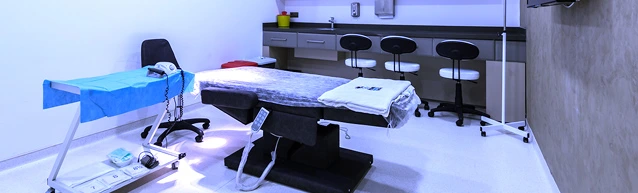
Hair World Turkey est une clinique de greffe de barbe bien établie et entièrement équipée à Istanbul. Situés dans de beaux locaux bien équipés au centre de la ville, nous offrons des résultats étonnants, des soins exceptionnels aux patients et un soutien et des conseils d'experts après les soins. Des greffes de barbe, de moustache ou de sourcils aux greffes de barbe à plus grande échelle pour hommes et femmes, notre équipe talentueuse et attentionnée peut restaurer vos barbe et votre confiance en quelques étapes simples. Nous pouvons vous aider à organiser votre voyage en Turquie pour nous voir et vous aider à planifier votre rétablissement avec un programme complet de rendez-vous de suivi, des recommandations de produits de soins capillaires et un service après-vente d'experts à chaque étape du processus. Nous avons hâte de vous aider à restaurer vos barbe et votre estime de soi avec notre équipe amicale et nos procédures éprouvées qui offrent des résultats incroyablement naturels.
Clinique de Greffe de Barbe haut de gamme et à part entière en Turquie
Appelez-nous dès aujourd'hui ou contactez-nous en ligne pour en savoir plus sur notre large gamme de services de greffe de barbe, nos chirurgiens talentueux, nos professionnels de la santé et notre équipe de soutien administratif, ainsi que sur nos locaux haut de gamme superbement aménagés. Notre clinique est bien établie avec une réputation d'excellence, de compassion et surtout de résultats chirurgicaux réussis et sécuritaires. N'importe qui peut être nerveux à l'idée d'explorer les options de greffe de barbe, en particulier à l'étranger. Laissez-nous vous soulager et vous montrer à quel point nos services d'experts peuvent être transformateurs. Vos barbe peuvent redevenir votre meilleur atout, grâce aux experts de Hair World Turkey ! Contactez-nous et nous pouvons organiser une consultation initiale sans obligation avec l'un de nos chirurgiens pour lancer le bal dès que vous êtes prêt.
Clinique de Greffe de Barbe haut de gamme et à part entière en Turquie"">
HWT CLINIC•
Commencez votre parcours de Greffe de Barbe
Commencez votre parcours de greffe de barbe avec HWT Clinic
Pour plus d'informations, veuillez nous contacter dès aujourd'hui pour organiser une première consultation sans engagement. Nous sommes impatients de vous rencontrer et de vous aider à restaurer votre barbe et votre confiance grâce à nos techniques d'implants de barbe à la pointe de la technologie.
Écoutez l'expérience de nos patients en matière de greffe de cheveux/barbe/sourcils en Turquie
Nous espérons que vous avez été impressionné par ce que vous avez lu jusqu'à présent sur nos services chez Hair World Turkey. Cependant, ne vous contentez pas de nous croire sur parole. Nous avons eu le plaisir d'aider de nombreux patients à augmenter leur confiance en eux et à subir une greffe de barbe au fil des ans.
De nombreuses personnes ont quitté notre clinique ravies des résultats de leur restauration de barbe et nous avons reçu des dizaines d'avis de greffe de barbe satisfaits en Turquie. Si vous souhaitez savoir ce que certains de nos anciens patients satisfaits ont à dire sur leurs expériences avec nous, écoutez leurs témoignages.
Si vous voulez savoir comment se fait la greffe de cheveux en Turquie, vous êtes sur le bon Blog.
Bienvenue sur le blog de la clinique HWT !
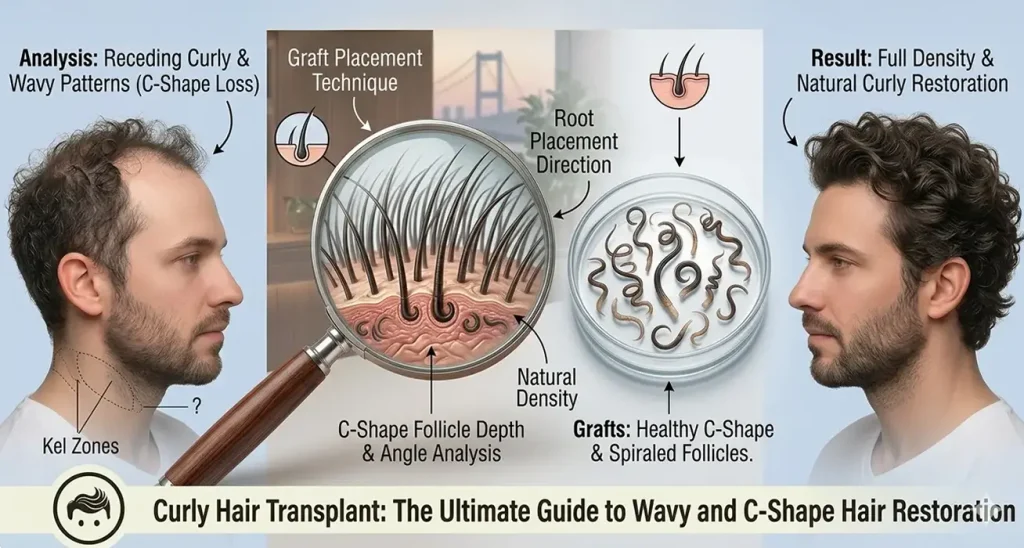
Curly Hair Transplant: The Ultimate Guide to Wavy and C-Shape Hair Restoration
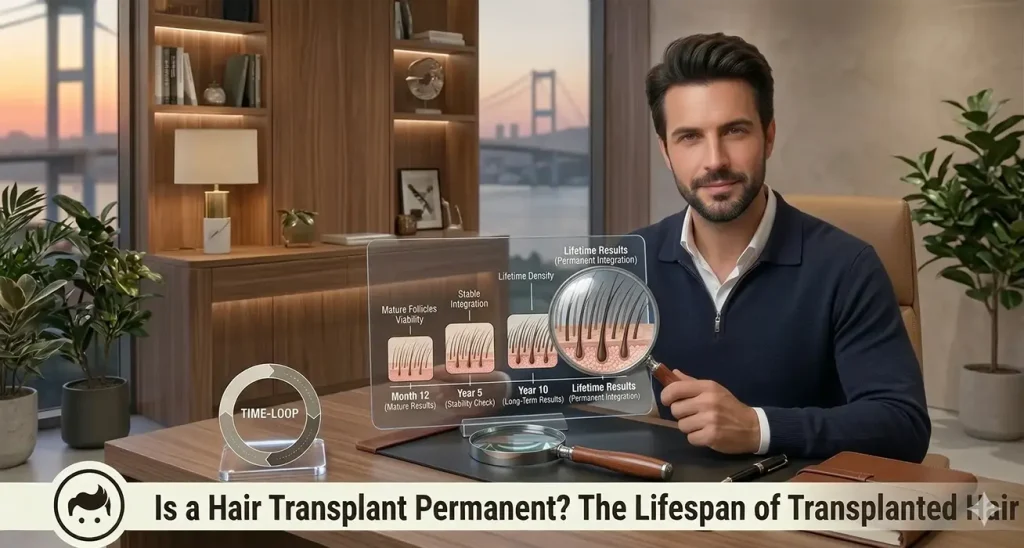
Is a Hair Transplant Permanent? The Lifespan of Transplanted Hair
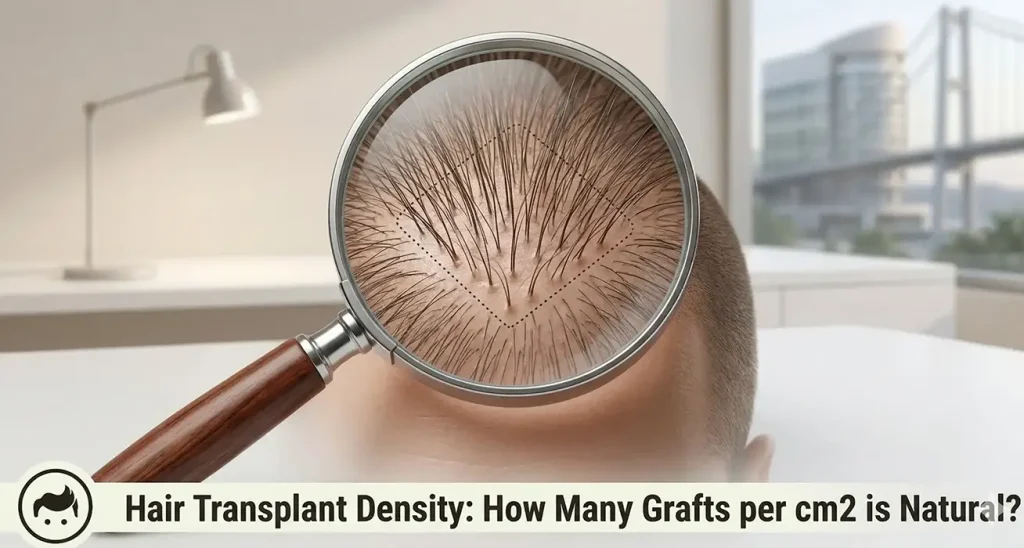
Hair Transplant Density: How Many Grafts per cm² is Natural?
VOUS POUVEZ TROUVER DES RÉPONSES À VOS QUESTIONS•
Questions fréquemment posées
The state-of-the-art hair transplant techniques that have been developed over the years have assisted to enhance the results to amazing natural looking levels. While it still depends on the skill and experience of the hair transplant surgeon somewhat, with some of the latest technologies, the results of hair transplant operation can look so natural that it may appear as though you never had any missing hair at all. Of course since the process has become much more meticulous and precise, this means that the end result is even more realistic when performed by a skilled surgeon. That being said, Turkey hair transplant will also change your look completely, most likely making sure you reacquire the look of your youth once again in a successful operation. During older hair transplant techniques large strips of skin with healthy hair follicles called grafts were removed from the nape or sides of the head and then were transplanted to the areas of baldness or where hair was thinning. Because these strips may have had a high amount of individual hairs looking in different directions attached to them, the results could look less than natural. But with modern techniques such as FUE, hair grafts are removed in smaller sections, sometimes even holding even a single follicle, and they are grafted to achieve a look as natural as possible.
In most cases, patients will see results of their hair transplant procedure between six and nine months after surgery. In some rare cases, it may take 12 months, because of the natural cycle of a hair follicle's life. It’s very important to note that between two and eight weeks after the procedure, all of the transplanted hair will fall out. This is normal and expected. In addition, by the third month after the procedure, the hair may look even thinner than before you had the transplant. Again, this is normal and expected. During this period, hair follicles are in the hibernation and rooting phases, where they connect with the infrastructure of your body to once again collect necessary nutrients and materials to grow healthy hair. During this phase, you may assist your hair by using medicine. Your doctor may recommend medicine that treats hair loss to get the best results from a hair transplant, as it will help to counter the natural hair loss and thinning that can continue in the area among the hair that already existed there.
FUE hair transplant procedure is painless when local anesthesia is used. FUE hair transplant procedure is a medical operation, even though it is less invasive and limited in scope than other operations. As such, it does cause some discomfort, usually defined by most patients as a mosquito bite, which can be annoying in large numbers. To alleviate this and to have the experience as smooth and enjoyable as possible, local anesthesia is provided to the patient via normal or needle free injector. The intravenous sedation to provide the local anesthesia is administered by an anaesthetist, depending on the age, weight and health conditions of the patient. This will not put the patient fully unconscious, but only relaxed and at ease. The high quality surgical steel grade tools that will be used during the procedure will also cause little, if any discomfort. In addition, it may be possible to use more specialized blades, and have the special wound dressings done right after the operation, then replaced the day after by our health-care professionals will affect the overall comfort of the patient.
Our hair transplant packages in Istanbul are priced as fixed, all-inclusive options (shown above in EUR/GBP/USD) — so you can compare clearly with no hidden surprises. Your final plan mainly depends on graft count, donor capacity, and whether your case is best suited for FUE extraction + DHI implantation. Most patients fit within one session, while larger coverage goals may require two sessions after medical assessment.Tip: If a quote looks unusually low, ask what’s not included (hotel, transfers, post-op meds, aftercare, final wash, follow-up).
This will depend on the technique to be used. In FUT technique, where entire hair follicles and the surrounding cells are completely removed from beneath the scalp surface in stripes, hair regrowth in these strips at the donor site will not at all be possible. It is possible for hair regrowth to take place only in areas at the donor site where the hair follicles were not fully, but selectively removed. Hair is expected to grow back from either side of the incision made, and under some cases, from inside the incision only after the scar has fully healed. This is one of the primary reasons why expert doctors try to keep the donor scar as thin as possible. In most cases the hair transplant doctor will harvest follicles from an area in the scalp with the densest concentration of hair, so that this loss will be barely noticeable. Usually the remaining hair surrounding the donor area is more than enough to conceal the donor spots. Modern techniques such as FUE will not remove skin and hair in strips, but in smaller, even singular follicular batches. This will both cause less scarring and keep the donor areas almost invisible and unnoticeable.
The cost of a hair transplant is highly variable, ranging between $3.500 - $15.000 in general, which also depends on many factors, such as where you live, the type of procedure you choose, the skill of your surgeon, how much hair you want transplanted, and finally travel costs. As most insurance companies consider a hair transplant a cosmetic procedure, these costs are often paid all out of pocket of the patient.
It works by extracting hair from one part of the hair where it is displaying healthy growth and implanting it under surgical conditions into areas where hair may be lost or thinning. For example, the scalp, chin or eyebrows. After a while, the transplanted hairs fall out as part of the normal healing process. They are then replaced by permanent hairs, produced by the newly stimulated hair follicles underneath the skin.
If your phobia is not extreme, we can use needleless anesthesia (COMFORT-IN). You will have the operation without any needles with this device. If your phobia is extreme, we provide sedation so that you will be asleep during the operation.
Yes, you can return to your country in only 2 days. You can choose to spend your weekend holiday this way.
In Turkey, there is a very large number of experienced doctors specialized in hair transplant. This huge number of hair transplant doctors have a high competition in the hair transplanting sector, which keeps the prices of hair transplant very affordable in recent years. Turkey's geographical location provides a great advantage, with direct flights from most European and Asian countries. This can save the cost of a flight ticket by 50% compared to most other destinations, which makes the trip to Turkey quite cheaper. In Turkey, luxurious hotels rates are very affordable all year long and finding suitable accommodation is far more easier compared to many other countries, as Turkey is a tourism focused country. In addition, most clinics in Turkey have some sort of All-Inclusive Packages, which will include the transportation, medication and accommodation costs in addition to the surgical cost. The primary reason for all these factors to be so affordable is the favorable rate of exchange of the local currency compared to foreign currencies. Usually, this means that an operation in Turkey will be at least one half as expensive as compared to most countries, and even eighty percent lower compared to other countries where such operations can be prohibitively expensive due to the over inflation of health services there.
Both FUE and FUT hair transplant techniques will require some healing afterwards, which needs some fundamental steps to be taken immediately following your hair transplant procedure. First of all, you should keep the area moist without letting the area get either too wet or too dry. Then make sure the swelling is kept to a minimum. Sleeping slightly propped up, preferably at a 45-degree angle for the first few nights post-procedure will help speed up healing. Taking an anti-inflammatory or other pain medication prescribed by your doctor will assist in minimizing any swelling or irritation. A cold pack can also help soothe the area, but avoid direct contact with ice. At least for the first 24 hours after surgery, you should avoid exercise. Afterwards, any vigorous exercise in the week following your hair restoration operation may cause scalp pain and swelling of your face. You may consider ACell + ,if they are recommended by your doctor for your specific case. When administered as part of your hair restoration surgery, it may improve hair graft survival, may speed up your recovery time considerably and may decrease any possible scar tissue formation. Follicles should be fed externally. If recommended by your doctor, Minoxidil solutions applied to the scalp will dilate blood vessels, thus may increase blood flow and nutrient delivery to the transplanted hair follicles. Using appropriate shampoo and conditioner as recommended by your doctor in the months following surgery will ensure both the hair grafts and native hair receive the nutrition they require to grow healthily.
FUE, FUT and DHI are all techniques for hair transplantation. Even though it is still survey, FUE is the most common and the least invasive hair transplant technique today. Although any decision on which method should be made with the guidance of your doctor, so that all necessary details of your personalized case can be taken into account.
The primary difference between the techniques of FUE and DHI is basically how the grafts are implanted into the recipient area. During the FUE technique, the canals are required to be opened prior to implantation, after which the surgeon manually implants the extracted grafts into the canals at the appropriate angle to get a natural look. Thus, the technique has two main phases. During DHI, a very specific implanter tool created for this purpose is used. This tool is known as a Choi Implanter Pen. This tool allows the implantation of a follicle to take place right after extraction, without the need to first create the necessary canals for the grafts.
The hair transplant procedure will be performed in our own hospital, in a medical clinic assigned just for this purpose, under local anesthesia. Entire process from its beginning to its end will be completed by our skilled surgeons and medical staff with every need of our patient being handled expertly.
The necessity of shaving the hair will depend on the technique to be used. With the FUE hair transplant technique, it is necessary to shave the donor area, usually in the back of the scalp. This is the place the grafts are taken from to replace the hair that has been lost. The follicles in this area are immune to the dihydrotestosterone (DHT) hormone, which is usually the primary reason for the hair loss on the top of the head. As such the hairs found here are the most obvious choice for providing a permanent solution to reverse the hair loss. For the FUT technique, shaving of the back of the head is not necessary, and longer hair on both sides of the donor area will cover the strip removed from there better.
Modern hair transplant results will last a lifetime. They are also natural looking and safe. While hair loss in the non-transplanted hair can progress in the future, the grafted hair will be permanent.
There is only one side effect of hair transplant that can't be avoided, and that is scarring. This will be minimized with a skilled surgeon, skilled medical staff, use of modern medical tools and techniques. In addition to this, in rare cases there may be infections, crust or pus drainage around the surgical sites, scalp pain, itching, and swelling, inflammation of hair follicles also known as folliculitis, some bleeding, some loss of sensation around the surgical sites, visible areas of hair that don’t match the surrounding hair or are noticeably thinner, or the patient continuing to lose hair if their hair is still in balding process.
As hair transplant techniques are medical operations, there are some medical conditions that can prevent patients from having them. Any patient who intends to undergo hair transplant must disclose any chronic or acute diseases he carries to their doctor to avoid any unforeseen problems. Heart diseases and blood pressure problems can prevent a hair transplantation procedure. If the condition is responding to the blood pressure regulator or antihypertensive drugs, it is possible to have the hair transplant performed after consultation with the doctor. As such, precautions will be taken before the operation by the doctor to deal with any emergency. Although in cases where blood pressure is constantly high and is hard to control with drugs, the hair transplantation should not be done. Diabetes, especially when it is not controlled or is in an advanced stage, can sometimes cause problems for healing of wounds and prevent blood clotting. For these cases, it is not possible to get a hair transplant procedure. If diabetes in a patient responds to the treatment, and the patient is generally in a healthy and balanced condition, it is possible to complete an hair transplantation procedure after the necessary analysis by the doctor, again taking any necessary precautions before the operation to avoid any unexpected complications. Hepatitis is a type of disease that has several different types, separated by letters (A-B-C-D-E). Only Hepatitis C patients are permanently banned from undergoing hair transplantation procedures. In the case of other types of hepatitis, the patient can undergo hair transplantation after the disease is cured and after the necessary tests are completed to ensure that the blood and the body of the patient is free from the pathogen causing the disease. AIDS patients are completely banned from hair transplantation due to the weakness of the patient’s immune system, as it is possible that the technique used in surgery will cause him very serious complications by exposing the patient to a large amount of foreign pathogens, with most likely lethal results. There are various types of thyroid disorders which can cause both hair loss and loss of hair density. Hair loss caused by these thyroid disorders is usually characterized by being spread all over the body, and not just in the head. It is possible to have hair transplantation performed for people with thyroid disorders after consultation with both the doctor dealing with thyroid disorders and the doctor who will perform the hair transplantation so that the hormones will remain stable in the patient’s body, and the disorder will not repeat itself, causing hair loss again.
A patient should expect to protect their scalp from the sun for at least four months after the hair transplant procedure. A hat should be worn during this period to fully cover the hair transplant area, and until the incisions are completely healed, sunscreen lotions or sprays should be avoided. After all of the incisions have healed, it is still recommended to use a hat and a sunscreen with high protection for several more months. Any incision made in any section of the skin will make it more sensitive to light, especially to the ultraviolet rays put off by the sun and in artificial tanning beds. In addition, exposure to sun can hinder the natural healing process and result in excess visible scarring in the transplant area. The area of the skin transplanted is also unable to protect itself from sun exposure for at least a few months following the hair transplant procedure. The cells found in every human being called chromatophores are responsible for pigmentation of the skin, and they darken to protect the skin from further exposure, when they are exposed to the sun. When a section of the skin is transplanted, these cells either die or go dormant for a while. In most cases it will take several months for these cells to regenerate. This will leave the transplanted skin at greater risk for sun damage. Hair transplant techniques involve several layers of the skin, and is not limited only to the surface layer, called epidermis. While the epidermis heals relatively quickly, deeper layers are much slower to heal. If damage from sun exposure penetrates the epidermis, the underlying layers, tissues and hair follicles that have not yet healed can be damaged, and lead to a failure in hair transplant itself.
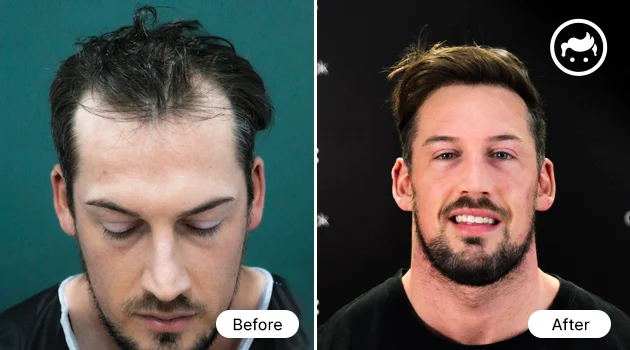
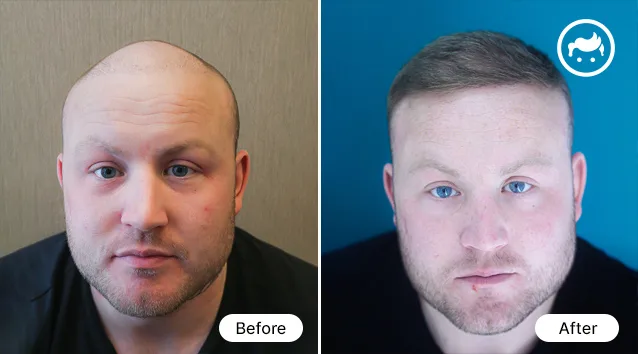
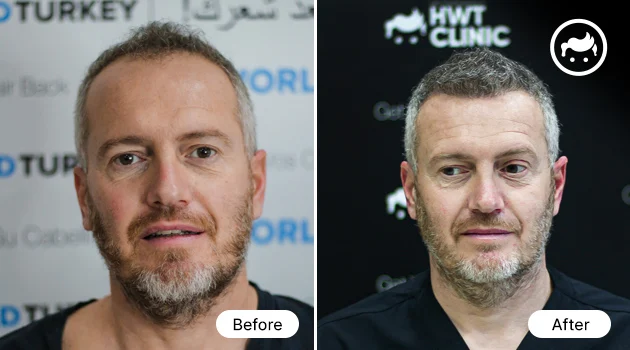
You can see the results from our former hair transplant procedures and their testimonials from here. You can also follow the results and testimonials of our patients from our social media;





 12:45
12:45




 01
01 02
02 03
03 04
04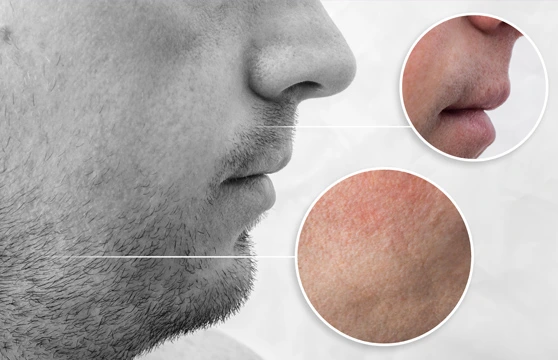



 Clinique de Greffe de Barbe haut de gamme et à part entière en Turquie"">