

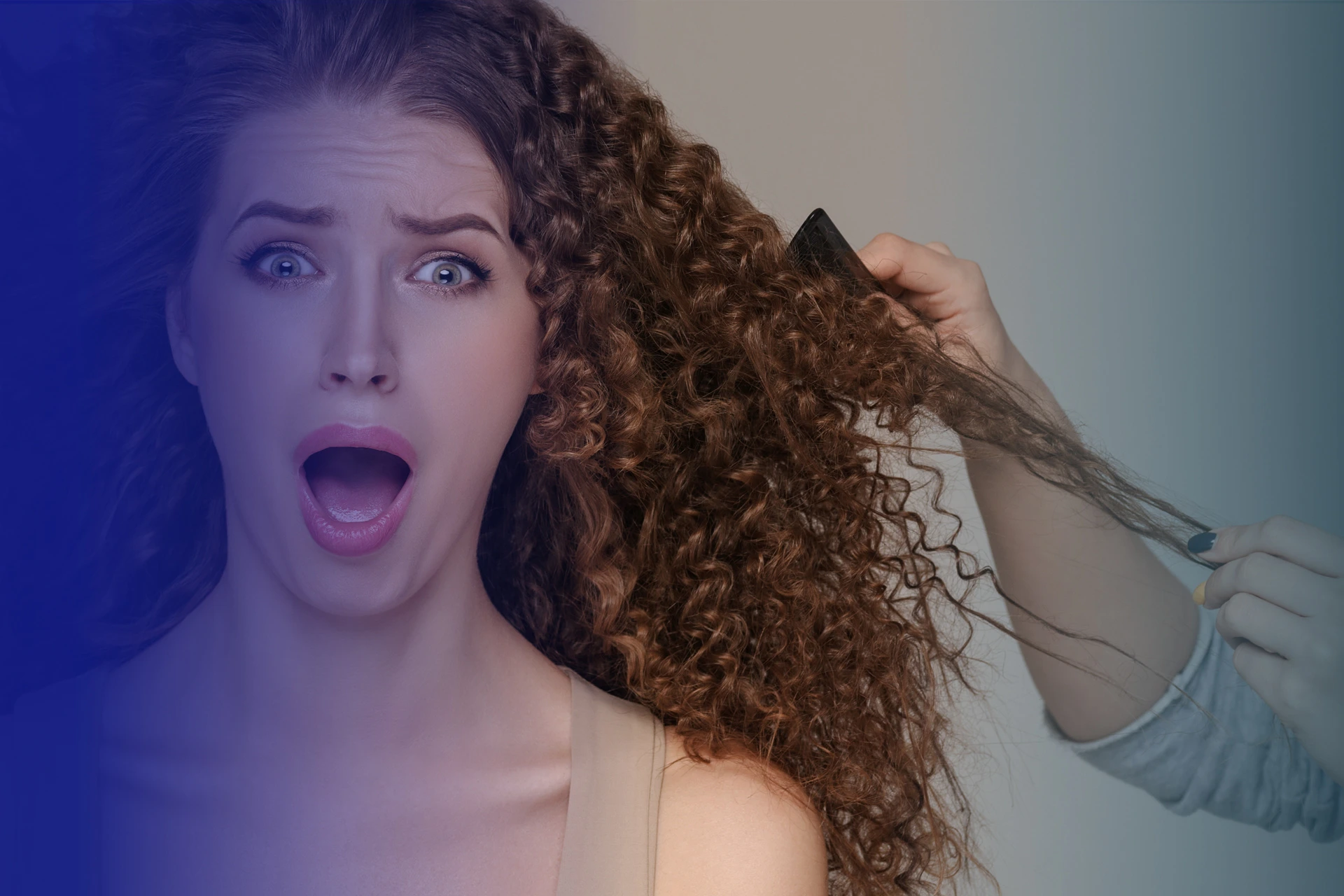

Although hair loss is less common in women than in men, 30% of women experience hair loss once in their lifetime. Generally 25% of women aged 35-40 years and 50% over 40 years, hair loss may occur. Also, most women in the 50-60 age group experience hair loss due to menopause. Although the major causes of hair loss in women are genetic factors, different reasons such as vitamin deficiencies, hormonal imbalances, stress and anxiety, thyroid problems, birth control medication use, and pregnancy can cause hair loss. In addition to this, various treatments applied to women’s hair also affect the hair loss process.
In ninety percent of women, shedding occurs on the entire scalp. 10% of the hair loss is seen in the front and side of the hair as in men. However, a baldness is not seen exactly like in men. In women, the reason for late discovery of hair loss is that the front hairline is mostly protected. Hair loss progresses in the form of thinning and shedding.
Hair loss in women can sometimes begin during puberty. If hair loss is accompanied by menstrual irregularities, acne and body hair growth, hormonal values should be checked. The causes of hair loss in women are divided into two as permanent and temporary. The reasons that trigger permanent hair loss are as follows;
The reasons that temporarily increase hair loss in women are as follows;
In addition to these reasons, another reason that increases hair loss or decreases hair quality in women are some of the procedures applied by women for their hair. Exposing the hair to intense heat, dyeing the hair frequently, some hair conditioners, permanent hair dryers (such as Brazilian hair dryer) may deteriorate the quality of the hair and cause thinning and loss of hair. In addition to this, making the hair very tightly braid, tightly gathering can also cause hair loss.
Hair loss in women is much more complicated than men and can be seen for different reasons. Spending time in stressful environments, experiencing mood disorder, feeling trapped with anxiety problems can cause hair loss. Excess vitamin A, eating disorders, zinc and essential amino acid deficiency, intestinal and digestive problems and frequent general anesthesia are also responsible for hair loss in women.
The most common hair loss in women after genetic hair loss is telogen effluvium. In this case, while 10% of the hair on the scalp is in the telogen phase, the hair follicle (up to 30-50% hair) enters the telogen phase and begins to fall out. The daily amount of hair loss can range from 150 to 700. Mostly confused with genetic shedding. In pregnancy, women enter a lucky period about their hair. Most women become hairy and healthy. However, most women may experience hair loss due to telogen effluvium 3 months after birth. Telogen effluvium, which is usually seen in women between the ages of 30-60, can cause sudden and unreasonable 150-700 strands of hair loss per day and may spontaneously disappear within 6 months. Although it does not cause baldness, it causes thinning of the hair in the temples.
In women, chemotherapy drugs can cause a much more common and severe hair loss called “anagen effluvium. With the use of medication, the hair begins to fall out within a few days to a few weeks, and women may lose approximately 80% to 90% of their hair. However, with the termination of the use of chemotherapy drugs, the hair returns to its original state. In case of hair loss due to all causes other than radiation, the hair comes back.
Alopecia areata is an inherited, non-marking and autoimmune disease and is one of the important diseases responsible for hair loss in women. In this disease hair loss is occurred from region to region. Not only is this possible in hair, but also in any area with hair in the body. Mostly, the hair starts to grow again between 6 months and 1 year.
Hair loss may also occur in women due to skin injury and inflammation. Injury and inflammation may cause damage to the hair follicles, resulting in a hair loss called scatricial alopecia, which is divided into two. The first is due to autoimmune diseases that develops as a result of the attack of the immune system to the hair follicles. Cutaneous lupus erythematosus, lichen planoplaris, frontal fibrosing alopecia, folliculitis decalvans, keloid acne, necrotizing acne can cause hair loss but the hair may grow again. The second occurs with exposure to physical or chemical traumas. Chemical injuries, burns, insect bites, radiation, some fungal infections, long-handed hair breaks, inflammatory dermatological diseases (psoriasis, pitriasis, morphea, scleroderma, sarcoidosis) can cause hair loss in women. Prolonged hair removal by hand is a result of obsessive-compulsive psychological discomfort and causes irreversible hair loss.
Hair loss should not be underestimated in women, it should be taken under control in consultation with a specialist physician.
In menopause, women may experience hair loss or their diluted hair may become thick. The main reason for this is the change in hormone levels during menopause. The decrease in estrogen and progesterone levels increases the male hormone and its effects. In the same way, hair loss may increase with the effects of aging.
In menopause, hair follicles can not be fed enough and hair starts to thin. The hair, which becomes difficult to grow, starts to fall, especially on the top of the head. When the hormone treatment is started for menopause symptoms, the condition of the hair improves.
Types of Hair Loss in Women
As we explained earlier, there are 3 types of shedding in women:
Type 1 mild shedding: This stage is early period shedding and with good screening the person can camouflage this problem. There is no need for anterior hair line and no surgical intervention is required.
Type 2 moderate shedding: This process manifests as a significant opening in the middle part of the hair and a decrease in hair volume. Although the front hairline is maintained, Turkey hair transplantation can be considered for the hair on the neck and sides.
Type 3 advanced shedding: Thinning of the hair is intensely felt and the top and front hairline are highly affected by hair loss. Regardless of the type of hair roots and structure of the upper and lateral parts of the scalp, these women can be transplanted.
In order to understand the causes of hair loss in women, medical and family history is learned in addition to physical examination. Hair loss frequency, medication used, diet or nutrition style, allergic reactions are also learned. In addition, some tests can be performed to find out the causes of hair loss in women.
Blood test: A blood test is performed to help reveal medical conditions related to hair loss. Complete blood count test (CBC), iron level, vitamin B, zinc, biotin, values are learned. Thyroid function tests should be added to the B test.
Tensile test: Tensile test can be used to determine the stage of female hair loss. The hair is pulled slightly to see how much hair is coming. If the density of the hair that comes to hand is high, the hair is examined under a microscope.
Scalp biopsy: Biopsy is performed by sampling the hair follicles from the scalp to find out the cause of the infection that causes hair loss.
Hair Loss Treatment in Women
Hair loss in women can be treated with many different treatment methods. Drug treatment, mesotherapy, PRP and hair transplantation can be applied according to the cause or course of hair loss.
Mesotherapy can be preferred for hair that is shed, tapered, worn and does not grow with environmental factors in women. Mesotherapy treatment can strengthen the existing hair follicles, but does not regenerate hair. Hair mesotherapy is applied by injecting the specially prepared ingredients into the middle layer of the scalp. Thus, more effective and faster results are obtained than oral or intravenous drugs. It is advantageous since it does not require any preparation or hospitalization before mesotherapy application and it does not have any side effects. Mesotherapy treatment applied to the patient is arranged in different amounts according to the person and situation. The person can return to normal daily life immediately after mesotherapy treatment.
PRP treatment can be applied for dull hairs that are observed with male pattern and androgen hormone hair loss seen in women. PRP treatment for hair depends on the principle of taking one’s own blood, centrifuging and then injecting it again with micro-needles. The white blood cells, platelets, and platelets in the blood contain growth factors that stimulate the regeneration of the dilute or balding area, allowing cell regeneration in the area. After 30 minutes of PRP, there are no signs and side effects. PRP should be administered at 4-6 week intervals depending on the person and the situation. Detailed information about PRP can be found here.
Minoxidil: Some tropical medicines are also used against hair loss in women. The only FDA-approved androgen-independent treatment, Minoxidil, acts to slow and stop hair loss.
Hair Transplantation: Hair transplantation in women is particularly effective in people with patterned or regional hair loss. Hair transplantation, which is the most effective method in hair loss, is based on the process of removing the hair-resistant hair follicles from the donor area (nape) to the required areas. In the hair transplantation process applied to women, it is not necessary to scrape all the hair. If the donor area is sufficient for planting, the success rate is often high. When considering Turkey hair transplant options, many individuals are drawn to Turkey due to its renowned expertise in the field and the cost-effectiveness of procedures. The Turkey hair transplant cost is notably competitive, making it an appealing choice for those seeking a solution to hair loss without breaking the bank.



You are just one step away from getting a completely free medical analysis.
Close windowWhich image best describes your current hair loss? Or use Voice Input.
Your age helps us determine the stability of your donor area.
At your age (18-23), hair loss is likely still progressing. We highly recommend preventative medical treatments.
Get Info on TreatmentsHave you ever had a hair transplant before?
Do you have any of the following health conditions?
Calculating graft density and hairline design.
Estimated Graft Need
🏆 Highly Recommended: VIP
We strongly recommend the VIP Package as it includes sedation/anesthesia, ensuring a completely comfortable and painless procedure.
📸 Please prepare these 3 photos for the doctor (Front Area, Top Crown, Back Donor):