

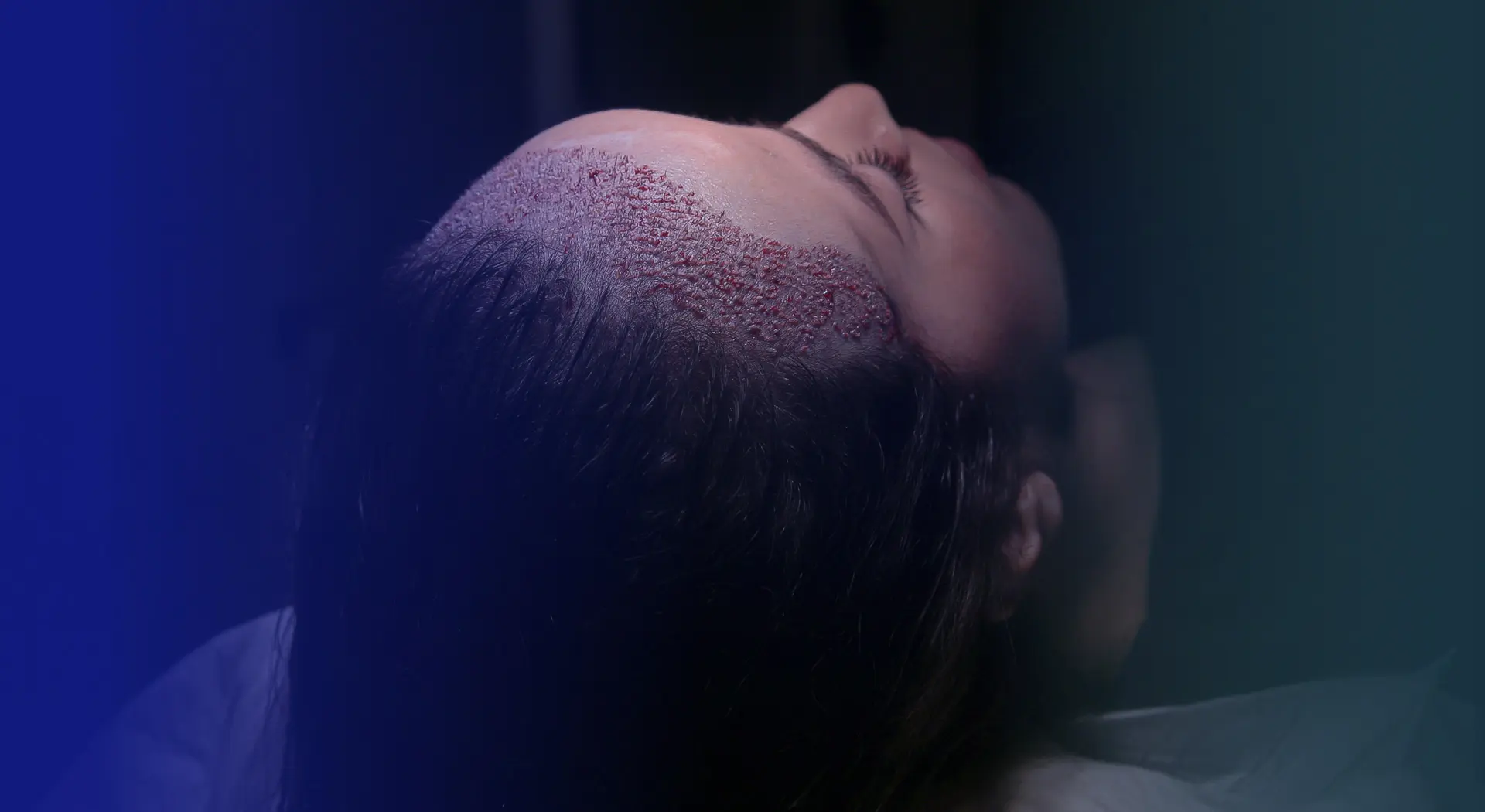
Hair Transplant for Women in Turkey: Who It’s For & What Results to Expect
Female hair transplant is ideal for women with thinning at the hairline, part line, temples, or localized areas — with a doctor-led plan focused on natural blending and realistic density improvement.BOOK FREE CONSULTATION
Official Partner of Manchester City Football Club

Female Hair Transplant in Turkey
Female hair transplant is designed to restore natural-looking density in areas such as the hairline, temples, part line, or localized thinning. Because female hair loss patterns can be different from male patterns, the most important step is a doctor-led assessment to confirm suitability and set realistic expectations for your goal. If you want transparent packages and what’s included, please check our Turkey hair transplant guide.What is Hair Transplant for Women?
A female hair transplant is a personalized procedure designed to improve density in areas that commonly concern women — such as the hairline, temples, part line, or localized thinning. The goal is usually natural blending with existing hair and realistic density improvement, based on your hair loss pattern and donor strength.Because female hair loss can present differently than male pattern hair loss (often more diffuse), the most important step is a doctor-led assessment to confirm whether you are a suitable candidate and what outcome is realistic for your goal. If you want to read the full technique guides separately, see DHI Hair Transplant and FUE Hair Transplant. To understand how these procedures are priced, review the main hair transplant cost in Turkey guide. 
How Does Hair Transplant for Women Work?
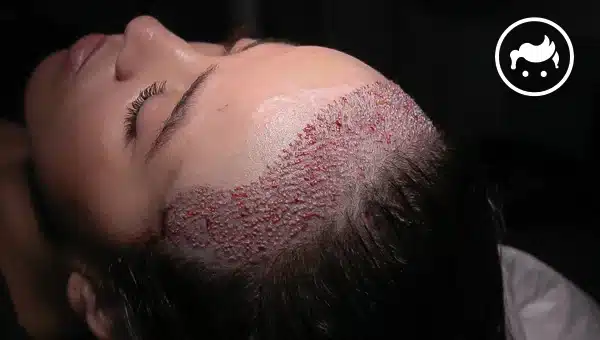
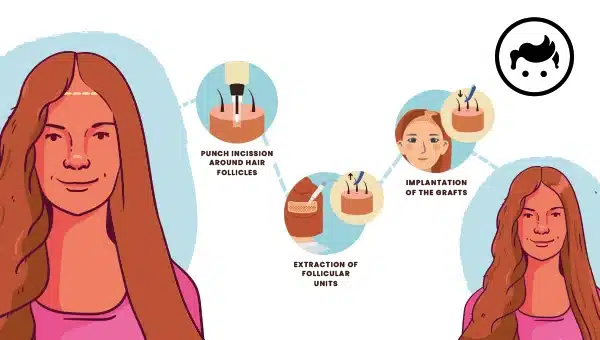
A female hair transplant works by moving healthy follicles from a donor area to areas with thinning (such as the hairline, temples, or part line) to improve density and natural blending. After the procedure, it’s normal for transplanted hairs to shed in the early weeks — the follicles remain under the skin and new growth typically starts gradually over the following months, with maturation continuing up to 10–12 months.For a detailed recovery timeline (kept separate to avoid overlap), see Recovery Timeline (Week 1–Month 12).
How Much Does Hair Transplant for Women Cost?
Female hair transplant pricing is case-dependent because it varies by the pattern of hair loss, the target area(s), donor capacity, and the plan required for natural blending. Instead of per-graft estimates, we recommend reviewing our hair transplant cost in Turkey guide to see exactly what a comprehensive package includes.
•
Female Hair Transplant in Turkey (Natural Density for Women)
Female hair transplant is planned differently than typical male cases — the focus is usually natural blending, realistic density improvement, and a plan that matches your hair loss pattern. If you want to compare package options and see what’s included, please use our transparent pricing page. If you’d like, our team can also guide you to the most suitable option after a quick assessment.

What Are the Advantages of Hair Transplant for Women?
The main advantages of a female hair transplant are natural-looking improvement and long-term density in the areas that matter most (such as the part line, hairline, or localized thinning). Because the transplanted follicles behave like normal hair over time, most women can style and maintain the result with a regular routine once growth matures. The key is realistic planning: the best results come from a doctor-led assessment that matches your hair loss pattern with an achievable density goal.
What Are the Disadvantages of Hair Transplant for Women?
A female hair transplant is not the right solution for every case. The biggest limitation is suitability: some female hair loss patterns are diffuse, so a doctor-led assessment is essential to confirm whether transplantation will meaningfully improve density. Another limitation is time — results are gradual and require patience as growth and maturation develop over months. Finally, depending on the plan, some women may prefer techniques that avoid linear scarring concerns. The safest approach is to focus on realistic expectations and the right candidate selection rather than a one-size-fits-all promise.
What is the Lifespan of a Hair Transplant for Women?
Transplanted hair is generally long-lasting because donor follicles are typically more resistant to the hormonal patterns that drive common hair loss. However, female hair loss can be progressive, which means your native (non-transplanted) hair may continue to thin over time. The best way to protect the long-term look is realistic planning (matching density goals to donor limits) and choosing a plan that fits your hair loss pattern. A doctor-led assessment can also advise whether supportive medical management is recommended for ongoing thinning.
Can Women Get a Hair Transplant?
Yes — many women can be good candidates for a hair transplant, especially when the goal is improving density in specific areas like the hairline, part line, temples, or localized thinning. The most important factor is the hair loss pattern: some patterns respond very well to transplantation, while diffuse thinning may require more careful planning. A doctor-led assessment should confirm suitability, donor strength, and what result is realistic for your goal.
Where Can I Get a Hair Transplant for Women?
You can get a female hair transplant at clinics that offer doctor-led planning and have clear experience with female hair loss patterns (especially part line thinning and diffuse cases). The right choice is not the country — it’s the standard of assessment, donor planning, and realistic expectations. If you’re considering Istanbul, start by comparing clinic standards, doctor-led planning, and realistic expectations, then request a consultation to confirm whether your pattern is suitable and what result is realistic.
Which Hair Transplant Technique is Most Effective for Women?
For women, the most effective technique is the one that matches your hair loss pattern and density goal. Many female cases need careful planning for natural blending (especially in the part line and diffuse thinning patterns). The best method depends on donor strength, the target zone, and whether shaving is acceptable. For full method guides, see DHI Hair Transplant and FUE Hair Transplant.
What is the Success Rate of Hair Transplant for Women?
Success depends on correct candidate selection and realistic planning — especially in women, where thinning can be diffuse. Rather than quoting a single percentage, the most reliable predictor is whether your pattern is suitable for transplantation and whether your donor area can support the density goal. A doctor-led assessment should confirm suitability, donor limits, and what outcome is realistic for your case.
Are Female Hair Transplants More or Less Successful Than Men?
Female and male transplants can both be highly successful — the difference is usually the hair loss pattern. Women more often present with diffuse thinning, so planning focuses on natural blending and realistic density improvement rather than extreme coverage. With the right candidate selection and a proper plan, female results can look very natural and satisfying.
Is FUE Effective for Women?
Yes — FUE can be effective for women when the hair loss pattern is suitable and the donor area is strong. The key is planning for natural blending in areas like the part line, hairline, or localized thinning. For details, see FUE Hair Transplant.
Is FUT Hair Transplant Effective for Women?
FUT can be effective in selected cases, but suitability depends on your donor characteristics, hairstyle preferences, and whether a linear scar is acceptable. Many women prefer plans that keep styling options flexible. For method details, see FUT Hair Transplant.
Is PRP Effective for Women?
PRP is a non-surgical treatment that may support hair quality in some women, depending on the cause and pattern of thinning. It is often used as a supportive option alongside a long-term plan, rather than a replacement for surgery when transplantation is truly indicated. Learn more here: PRP Hair Treatment.
Is NeoGraft Effective for Women?
NeoGraft is a device-assisted way to perform FUE extraction. Whether it’s suitable for you still depends on your pattern, donor strength, and the plan for natural blending. If you want to learn more, see: NeoGraft Hair Transplant.
What is the Difference Between Hair Transplant for Women and Men?
The main difference is the typical hair loss pattern and the planning approach. Men often have more defined zones of recession, while women more commonly have diffuse thinning — so female planning focuses on natural blending and realistic density improvement. The techniques can be similar, but the strategy and candidate selection are usually different.
•
Frequently Asked Questions
Both FUE and FUT are successful hair transplantation methods for females. FUE must be selected by women who prefer a scar-free outcome due to the fact it fails to produce a linear imprint. Female patients, on the contrary hand, can choose the FUT procedure if they prefer not to have shaven throughout their treatment.
Regardless of gender, the level of pain experienced afterwards the transplantation of hair process can vary from people to people. Although pain is to be assumed throughout any surgical procedure, measures are implemented to minimize pain and assure the patient's comfort. The overall experience of each patient differs, and the expertise and attitude of the surgeons are essential to decreasing pain and ensuring a pleasant surgical experience.
Yes, when carried out by a qualified and knowledgeable transplantation surgeon, female transplants of the hair can obviously lead to natural-looking consequences. The transplanted hair treatment seeks to restore hair in a manner which integrates organically with the patient's existing hair, affording an individual an appearance that is natural.
Hairline design, fraft placement, donor hair choosing, hair quality, and hair elements are some of the features that contribute to helping women with hair transplants to accomplish final results that appears natural.
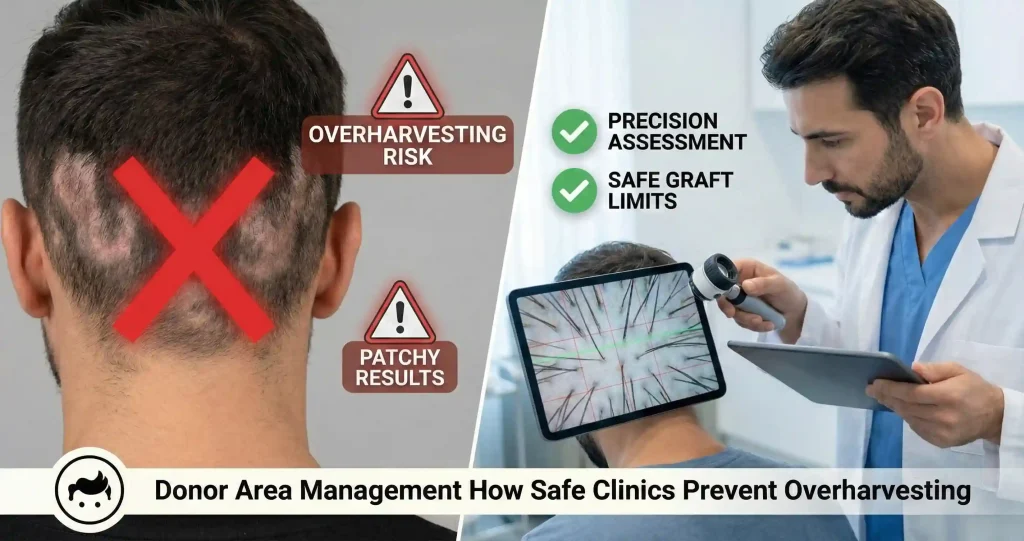
Several variables affect how hair regrows and how long it takes the donor location to start producing regular quantities of hair. The technique of extraction and how you care about the donor location afterwards hair transplant surgery both have an effect. The donor hair that gets eliminated throughout a transplantation of hair treatment normally does not regrow in the donor place. However, the surgical removal of some of the hair is essentially undetectable when the hair graft extraction is performed appropriately. For all of these reasons, it is important to engage a skilled surgeon and eradicate the donor region cautiously.
Afterwards a hair transplantation wearing a cap is usually acceptable but healing requires time. It's crucial to pay attention to the surgeon's following surgery recommendations. In addition, there are some general suggestions for wearing a hat after a hair transplantation procedure, involving timing, hat selection, hygiene, and cautious handling. Consult with your surgeon for additional guidance.
It's vital to take into account that wearing a hat for an extended amount of time or laying too much pressure on a location wherein the hair was transplanted can impede the recovery process or impact the growth and development of the grafted hair.
HWT Clinic's Blog
Welcome to HWT Clinic's Blog!
HWT CLINIC•
Start Your Female Hair Transplant Journey
Are you thinking about the benefits of female hair transplant in Turkey? Perhaps you are concerned about thinning around the hairline, temples, or part line and want to understand whether you are a suitable candidate. We offer a full assessment by our hair transplant surgeons to define the best way forward. This ensures a fully personalised approach to secure the most natural-looking result possible for your hair. Begin your journey today by getting in touch with our friendly team. We can talk you through your options and discuss costs, timing, and what to expect.