
Dr. Sedat Öz
Written by Dr.Muhyeddin Bedük
5 February 2026
Average reading time of this content is 3 minutes
This content has been read 117 times

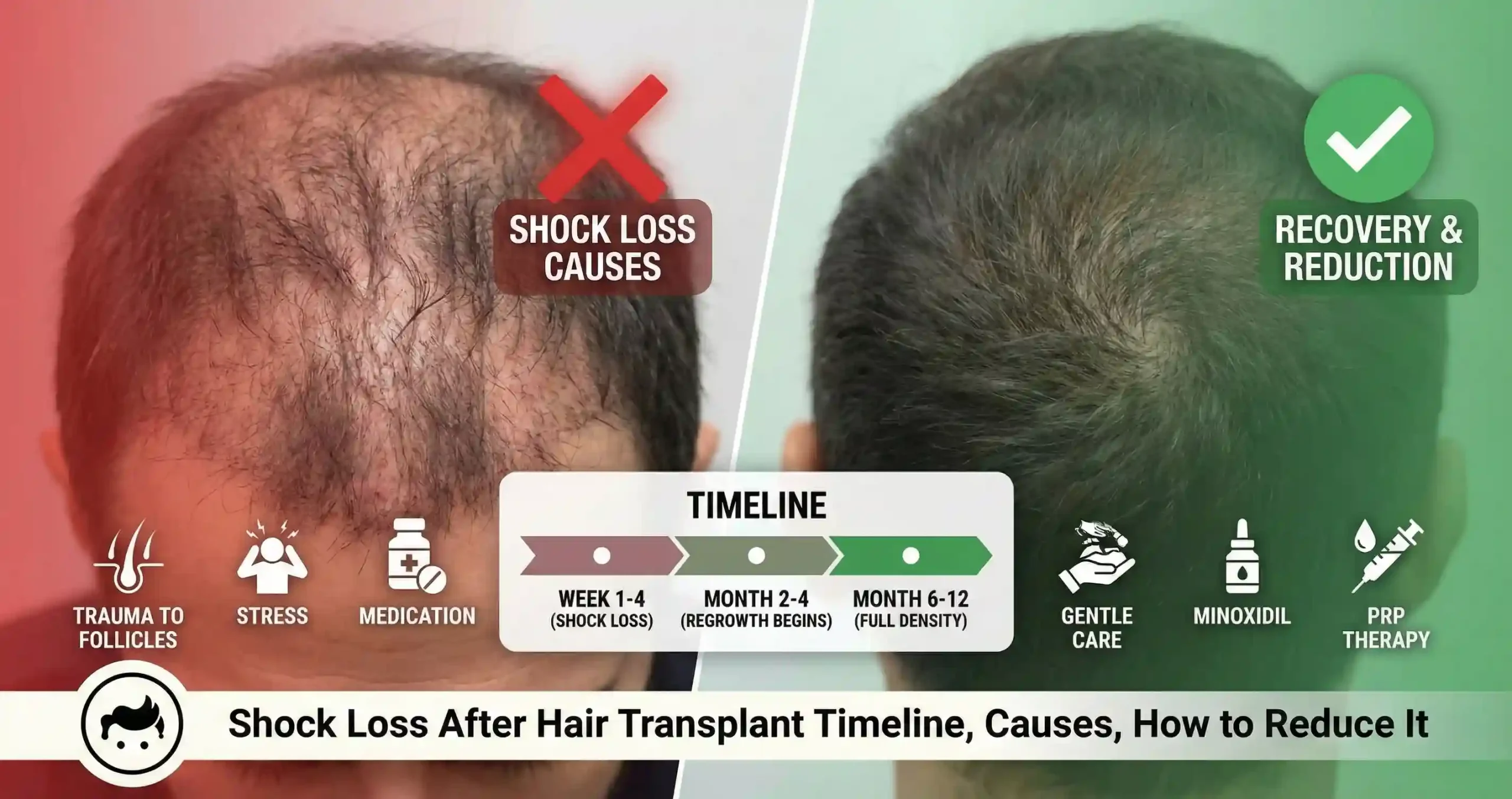
Shock loss after a hair transplant in Turkey can be stressful — because it looks like you’re “losing progress.” In most cases, it’s temporary and part of the normal recovery process. Understanding this phase is crucial for maintaining peace of mind as your new hair follicles prepare for long-term growth.

This page focuses only on shock loss:

  • What it is (simple explanation)
  • Timeline (week-by-week)
  • Risk factors
  • What helps vs what doesn’t
  • When it’s not shock loss

For a full package breakdown and treatment planning overview, review our guide to hair transplant costs in Turkey.

What shock loss is (simple explanation)

Shock loss is temporary shedding that can happen after a hair transplant because the scalp goes through stress (trauma + inflammation + changes in blood supply). It can affect:

  • Transplanted hairs (common and usually expected as part of the shedding phase)
  • Existing native hairs near the transplanted area (this is what people usually worry about)

The important point: in most cases, shock loss does not mean the follicles are “gone.” It usually means hairs are shedding while follicles remain under the skin and later restart growth.

Shock loss timeline (week-by-week)

Everyone heals differently, but a typical pattern looks like this:

Week 1–2

  • Redness/scabbing is the main focus
  • Shedding is usually not the main event yet

Week 3–4

  • Shedding often begins
  • You may notice transplanted hairs falling out
  • Some people notice thinning of nearby native hairs

Week 5–8

  • Shedding can continue
  • The scalp can look “worse before better”
  • This is still commonly normal

Month 3

  • Early regrowth may begin
  • Density is still low — this is the start, not the final result

Month 4–6

  • Noticeable improvement for many patients
  • Hairs start thickening and blending

Month 9–12

  • Maturation phase for texture and density
  • Final look becomes more natural

For a clear guide on the first two weeks (covering sleep, washing, scabs, and swelling), read our day-by-day hair transplant recovery guide.

Risk factors (who is more likely to experience shock loss)

Shock loss is more likely when:

  • You already have weak native hairs in the recipient area (miniaturized hairs)
  • The procedure involves dense work near existing thin hairs
  • You have aggressive hair loss history
  • You smoke or have poor recovery habits (sleep, nutrition, aftercare)
  • There’s high inflammation or prolonged scalp irritation

Note: Some shedding is expected even in perfect cases. The goal is to minimize unnecessary stress and protect both grafts and native hairs.

What helps (and what doesn’t)

What helps

  • Follow aftercare instructions precisely (especially washing and “hands-off” rules)
  • Avoid heavy sweating and intense workouts in the early period
  • Sleep properly (especially in the first week)
  • Protect the scalp from sun and friction
  • Stay consistent with any doctor-approved plan for hair stability

What doesn’t help

  • Panic treatments started randomly without medical guidance
  • Over-washing, scrubbing, or picking at scabs
  • Harsh shampoos or aggressive scalp massage early on
  • “Guaranteed regrowth hacks” from forums and TikTok

When it’s NOT shock loss (when to contact your clinic)

Shock loss is typically shedding without severe “warning signs.” Contact your clinic if you notice:

  • Increasing pain after day 3–4
  • Fever or chills
  • Pus, strong odor, or spreading redness
  • Sudden severe swelling or allergic reaction symptoms
  • Patchy areas that look injured (trauma or persistent inflammation)

If you are worried that you may need a repair plan due to a poor prior outcome or donor damage, consult our comprehensive guide on failed hair transplant repair options.

Quick reassurance

In the early months, it’s common for the scalp to look uneven, thinner, or “worse” before it improves. Shock loss and shedding can be part of the process — especially between weeks 3–8. The key is to stay consistent, protect the scalp, and follow a structured plan.

Related guides

Want a clear plan for your case?

If you want realistic expectations and a structured plan, explore our all-inclusive Turkey hair transplant packages before making your decision.

Then contact our team via WhatsApp to get started.

Need Help?

Ask From Whatsapp!

Wait! Don't Leave Yet

You are just one step away from getting a completely free medical analysis.

Close window

Hair Loss Assessment

Which image best describes your current hair loss? Or use Voice Input.

⚠️ Please select an option above OR be more specific.

Select Your Age

Your age helps us determine the stability of your donor area.

Transplant Not Recommended

At your age (18-23), hair loss is likely still progressing. We highly recommend preventative medical treatments.

Get Info on Treatments

Previous Procedures

Have you ever had a hair transplant before?

Medical History

Do you have any of the following health conditions?

Analyzing Data...

Calculating graft density and hairline design.

Your Assessment Result

Estimated Graft Need

  • Gold Package
  • VIP Package

🏆 Highly Recommended: VIP

We strongly recommend the VIP Package as it includes sedation/anesthesia, ensuring a completely comfortable and painless procedure.

⏳ Only 3 spots left for the VIP package this month.
Local Est. Cost:
Your Total Savings:
Our Offer:

📸 Please prepare these 3 photos for the doctor (Front Area, Top Crown, Back Donor):

⚠️ Medical Notice: Please get approval from your primary doctor before making a decision for a hair transplant.
Send Results & Get Consultation