

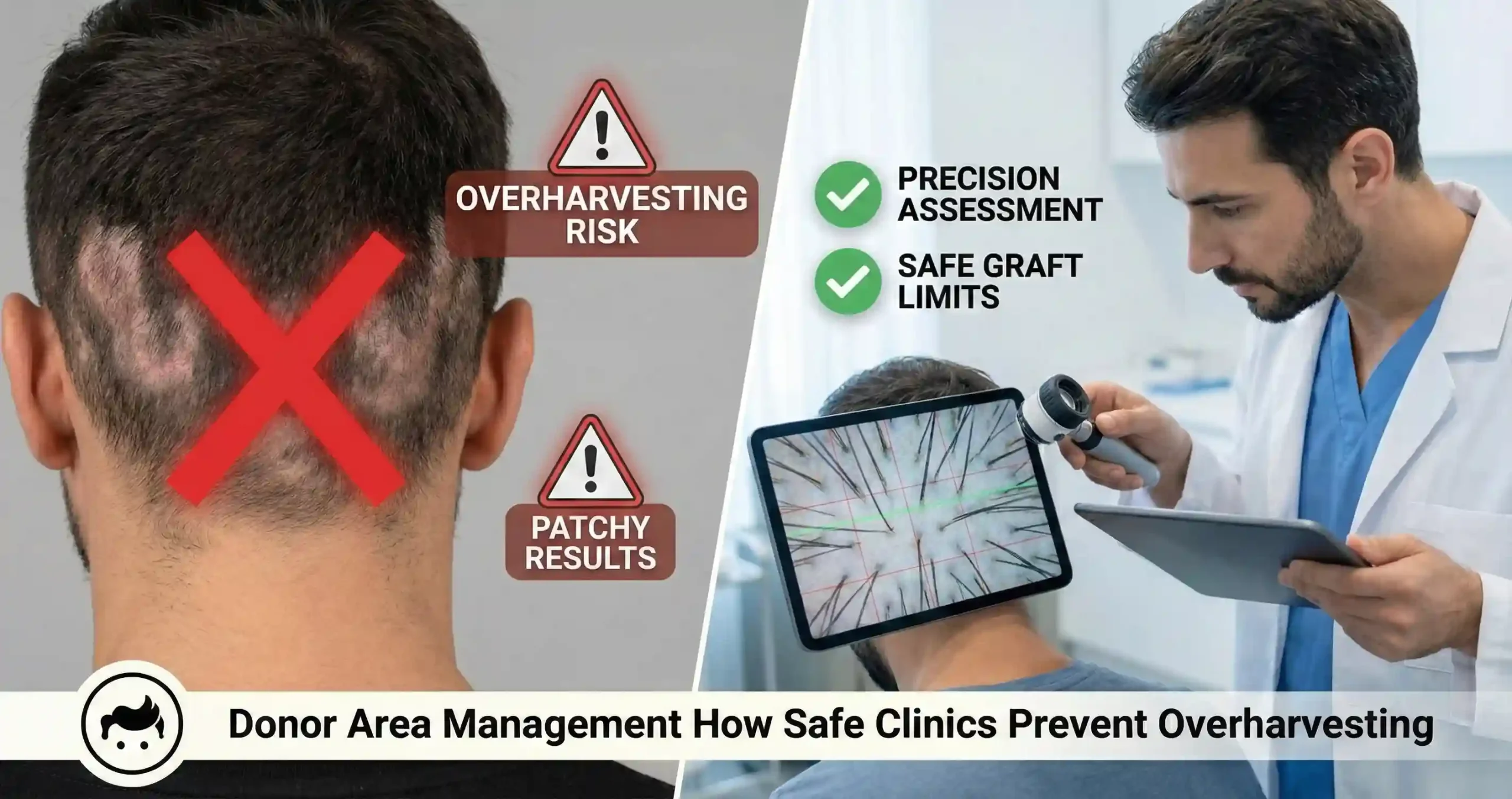

Your donor area is your lifelong supply — and once it’s over-harvested, it’s very hard to “undo.” When planning a hair transplant in Istanbul, proper donor area management is the most critical factor in ensuring a natural look while preserving enough grafts for any potential future needs.
This page focuses only on donor area management:
If you are still comparing options and want to see how we guarantee transparent planning, explore our Turkey hair transplant packages.
Overharvesting happens when too many grafts are taken from the donor area (usually the back and sides), leaving:
It’s one of the most common long-term problems caused by high-volume clinics that chase big graft numbers.
Some typical signs include:
Important: Early redness or temporary changes can happen after surgery — this page is about donor changes that remain visible after proper healing.
A safe donor plan is not “take as many as possible.” It’s:
A responsible donor strategy usually follows these principles:
Taking too many grafts from the same small area causes visible holes and patchiness.
A safe clinic protects donor reserves for:
If you have aggressive hair loss history, the donor plan must be more conservative.
Donor risk is higher when:
If you want a fast checklist to spot “graft-chasing” clinics, read our complete guide on the red flags in Turkey hair transplants.
Many patients ask: “How many grafts can you do?”
The better question is: “What’s my safe donor limit, and what’s the best plan within that limit?”
For typical graft ranges, please review our detailed Norwood scale graft estimation guide.
If your donor already looks patchy or thin after a previous transplant, you may need a repair-focused evaluation.
This comprehensive guide explains your failed hair transplant repair options and when to act.
Start by reviewing our transparent medical planning and check the hair transplant cost in Turkey to find the best package for you.
Then contact our team via WhatsApp to get started.


You are just one step away from getting a completely free medical analysis.
Close windowWhich image best describes your current hair loss? Or use Voice Input.
Your age helps us determine the stability of your donor area.
At your age (18-23), hair loss is likely still progressing. We highly recommend preventative medical treatments.
Get Info on TreatmentsHave you ever had a hair transplant before?
Do you have any of the following health conditions?
Calculating graft density and hairline design.
Estimated Graft Need
🏆 Highly Recommended: VIP
We strongly recommend the VIP Package as it includes sedation/anesthesia, ensuring a completely comfortable and painless procedure.
📸 Please prepare these 3 photos for the doctor (Front Area, Top Crown, Back Donor):