



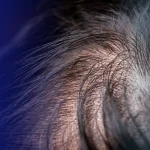
A crown hair transplant in Turkey restores thinning at the crown, also called the vertex—the circular area at the top-back of the scalp. Unlike a frontal hairline procedure, crown restoration must follow the natural whorl pattern and balance visual coverage against the patient’s available donor supply.
When planning a Turkey hair transplant, the crown should be assessed as part of the patient’s long-term hair loss pattern rather than treated as an isolated bald spot. The frontal area, mid-scalp, donor reserve and risk of future hair loss may all affect whether crown restoration should be performed immediately or planned as a later procedure.
This clinical guide focuses specifically on crown and vertex restoration. It explains how many grafts may be needed, why crown growth can appear slower, how the natural spiral pattern is recreated, what affects crown transplant costs in Turkey and why donor protection remains essential.
Quick answer: The number of grafts required for a crown hair transplant depends on the size of the thinning area, the amount of native hair that remains, hair calibre, donor density and the desired level of visual coverage. A limited crown area may be treated with fewer grafts, while a wider vertex affected by advanced hair loss may require approximately 2,000 to 3,000 grafts or staged treatment.
A graft estimate should not be based on Norwood stage or photographs alone. The medical team must also consider whether the crown is still expanding, whether the frontal and mid-scalp areas need priority and how much donor capacity should be preserved for future hair loss.
| General Crown Size | Possible Planning Range | Typical Objective |
|---|---|---|
| Small or early crown thinning | Approximately 1,000–1,500 grafts | Reinforce a limited thinning zone while blending with existing native hair. |
| Moderately sized crown | Approximately 1,500–2,000 grafts | Improve visual coverage across a more visible vertex area. |
| Large or advanced crown | Approximately 2,000–3,000 grafts | Restore a wider vertex while recreating the circular whorl pattern. |
| Front, mid-scalp and crown loss | Larger or staged procedure | Prioritise the areas that create the strongest visual improvement while protecting donor reserve. |
These are general planning ranges rather than fixed recommendations. Two patients with the same crown diameter may require different graft numbers because of differences in hair thickness, curl, scalp-to-hair contrast, native hair and donor quality.
A smaller or moderately sized crown may fall within the planning range discussed in our 2000 grafts hair transplant guide. A broader crown may require a plan closer to a 3000 grafts hair transplant, depending on individual suitability.
When the frontal area, mid-scalp and crown are all affected, doctors may consider a 4000 to 5000 grafts hair transplant or divide the treatment into separate procedures. You can also review our how many grafts do I need guide and the Norwood Scale for broader planning information.
Not sure how many grafts your crown may require? Use the calculator below for a preliminary estimate based on your hair loss pattern.
Not sure how many grafts you need? Answer a few quick questions to get a personalized graft estimate...
Crown-only restoration is different from treating a patient whose hairline, mid-scalp and crown are all affected. The number of available grafts may be the same, but the distribution strategy can be completely different.
When the frontal hairline and mid-scalp remain relatively stable, the planned grafts can be concentrated in the crown. This may allow the medical team to recreate the whorl pattern and provide stronger visual coverage across the vertex.
However, the doctor should still consider whether the crown is continuing to expand. Restoring a small central patch too aggressively while the surrounding native hair continues to thin may create an isolated transplanted area in the future.
When several zones are affected, the frontal hairline and mid-scalp are often prioritised because they frame the face and usually create the strongest visual improvement.
Spreading a limited graft supply equally across the entire scalp may leave every zone looking thin. For this reason, the crown may receive lighter coverage or be planned as a separate procedure after the frontal result has developed.
The correct strategy depends on the size of each recipient zone, the strength of the donor area, the patient’s age, future hair loss risk and personal priorities.
The crown is often described as a graft-hungry area because its hair grows outward from one or more central points in a circular whorl. The grafts must be distributed across this spiral pattern rather than placed predominantly in one forward direction, as they often are in the frontal scalp.
The crown is also exposed directly to overhead light. When the hair is thin, light can pass through the circular pattern and make the scalp more visible. Achieving visual improvement therefore depends on the size of the area, the angle of the implanted hairs, hair thickness and how effectively the grafts overlap.
This does not mean that the highest possible graft number should be used. Natural-looking hair transplant density depends on strategic distribution, donor quality, existing native hair and the long-term treatment plan.
Some patients notice that their frontal area appears to develop sooner while the crown still looks thin at six or eight months. This does not automatically mean that the crown transplant has failed.
The crown may appear to mature more gradually because the grafts are distributed across a broad circular surface and must blend with an existing whorl pattern. Lighting, hair length, hair calibre, graft number and the amount of native hair remaining can all affect how quickly improvement becomes visually convincing.
| Period | What Patients May Notice |
|---|---|
| Days 1–10 | Redness, small scabs and early surface healing around the implanted crown. |
| Weeks 2–8 | Many transplanted hair shafts may shed before the new growth cycle begins. |
| Months 3–4 | Early, fine and uneven new hairs may begin to appear. |
| Months 5–6 | Visible growth may increase, although the crown can still look thin under direct lighting. |
| Months 8–12 | Coverage generally becomes more noticeable as the new hairs grow longer and thicker. |
| Months 12–18 | The crown may continue to mature, depending on individual growth speed, hair characteristics and the size of the treated area. |
This timeline is an approximate guide rather than a guarantee. Growth speed and final density vary between patients. Results should be evaluated through consistent photographs taken under similar lighting rather than by comparing the crown directly with the frontal hairline at a single stage.
For a broader overview of shedding, early growth and maturation, review our hair transplant recovery timeline.
No. Early crown thinning does not automatically mean that surgery is the correct first step. The medical team should first determine whether the hair loss pattern is stable and whether enough native hair remains within the vertex.
Important assessment factors include:
In suitable patients, a doctor may discuss non-surgical treatment or continued monitoring before recommending transplantation. The purpose is to avoid using a limited donor supply too early while the surrounding crown continues to thin.
A hair transplant may become more appropriate when the pattern is sufficiently understood, the donor area is suitable and the expected coverage can be planned realistically.
Crown restoration involves two separate parts: obtaining suitable grafts from the donor area and implanting them according to the natural direction of the vertex.
At HWT Clinic, the FUE hair transplant method is used for extraction. FUE removes follicular grafts individually from the medically suitable donor zone at the back and sides of the scalp.
Because a large crown may require a substantial number of grafts, extraction must be distributed carefully rather than concentrated within one small part of the donor area. Structured donor area management helps reduce the risk of visible depletion, patchiness and overharvesting.
For medically suitable patients, HWT Clinic uses the DHI hair transplant method with Choi Implanter Pens for implantation.
With sharp implanter placement, the recipient opening and graft insertion can be performed in the same step. This provides close control over implantation angle, depth and direction.
During crown restoration, these variables are planned according to the patient’s existing whorl. The graft direction must gradually rotate around the central point rather than follow a single straight line. Correct orientation helps the transplanted hairs blend with existing hair and improves the visual coverage created by the available grafts.
DHI is not automatically the best method for every crown. The most appropriate technique depends on the size of the recipient area, the amount of native hair, donor capacity, graft requirements and the doctor’s surgical plan. Our DHI vs Sapphire FUE guide explains the technical differences in more detail.
The cost of a crown hair transplant in Turkey depends on the number of grafts required, donor-area complexity, the medical team’s involvement, the extraction and implantation methods and the services included in the treatment package.
Some clinics calculate the price per graft, while others offer fixed all-inclusive packages. A graft estimate should not be increased simply to justify a higher price. The treatment plan and final quote should be confirmed after the donor area, crown size and wider hair loss pattern have been evaluated.
Patients should also confirm whether the quoted package includes accommodation, airport and clinic transfers, medication support, the first wash and structured aftercare.
Aftercare is especially important following crown restoration because the implanted area may come close to the pillow or headboard during sleep. During the early healing period, patients should protect the recipient area from friction, pressure, scratching and accidental contact.
The required sleeping position and protection period should follow the clinic’s individual instructions. An elevated position and a travel neck pillow may help some patients avoid turning or applying direct pressure to the newly implanted crown.
Review our guide on sleeping after hair transplant for detailed positioning guidance. Patients should also follow the clinic’s washing, medication and photo check-in instructions carefully.
A second crown procedure should not be planned before the first result has developed sufficiently. The medical team needs time to assess actual graft growth, remaining native hair and the condition of the donor area.
A further crown session may be considered when:
This assessment often takes place around 10 to 12 months after the first procedure, although some crown results may require longer before the need for further treatment can be judged accurately.
The required number varies according to the size of the crown, existing native hair, hair calibre, donor density and the desired coverage. A small area may require approximately 1,000 to 1,500 grafts, while a broad crown may require approximately 2,000 to 3,000 grafts or staged treatment. The final number must be determined individually.
Early growth may begin around the third or fourth month, with more visible improvement developing between months six and twelve. Crown results may continue to mature beyond 12 months and, in some patients, toward 18 months. Growth speed varies according to individual biology, graft characteristics and the size of the treated area.
Two thousand grafts may provide useful coverage for a limited or moderately sized crown, but they may not create strong density across a large vertex. Suitability depends on the surface area, existing hair, donor quality and how the grafts are distributed.
No. Early or actively progressing crown thinning may first require medical assessment, monitoring or non-surgical management. Surgery is generally considered when the pattern is sufficiently understood, the donor area is suitable and realistic coverage can be planned.
The price depends on the graft requirement, donor complexity, medical involvement, treatment method and the services included in the package. The final cost should be confirmed after an individual crown and donor-area assessment.
Patients should avoid direct pressure and friction on newly implanted crown grafts during the early healing period. The recommended sleeping position and duration vary according to the treatment plan, so the clinic’s individual aftercare instructions should be followed.
DHI can be useful for suitable crown cases because it allows close control over the angle, depth and direction of each graft. However, it is not automatically the best method for every patient. The decision depends on existing hair, donor capacity, graft number and the doctor’s surgical plan.
A second crown procedure may be considered after the first result has matured sufficiently and the remaining donor capacity has been reassessed. This evaluation commonly takes place around 10 to 12 months after surgery, although some crown results may need longer before an additional procedure can be planned accurately.




You are just one step away from getting a completely free medical analysis.
Close windowWhich image best describes your current hair loss? Or use Voice Input.
Your age helps us determine the stability of your donor area.
At your age (18-23), hair loss is likely still progressing. We highly recommend preventative medical treatments.
Get Info on TreatmentsHave you ever had a hair transplant before?
Do you have any of the following health conditions?
Calculating graft density and hairline design.
Estimated Graft Need
🏆 Highly Recommended: VIP
We strongly recommend the VIP Package as it includes sedation/anesthesia, ensuring a completely comfortable and painless procedure.
📸 Please prepare these 3 photos for the doctor (Front Area, Top Crown, Back Donor):