



PRP hair treatment, also known as Platelet-Rich Plasma therapy, is a non-surgical treatment that uses growth factors from the patient’s own blood to support scalp health and follicle activity. For many patients, PRP can be part of a broader hair restoration in Turkey plan, especially when the goal is to support thinning hair, improve hair quality, or strengthen existing follicles before or after surgery. At HWT Clinic, PRP may be recommended for suitable patients as part of a doctor-led hair loss treatment plan.
PRP is not a replacement for a hair transplant when an area is already bald, but it can be useful for early-stage thinning, weak hair, and post-operative support in selected cases. If you are comparing different treatment options, you can review our broader hair treatments guide and our guide on hair loss treatments for men.
Platelet-rich plasma, or PRP, is a treatment that uses a concentrated portion of the patient’s own blood plasma. This plasma contains platelets and growth factors that are involved in tissue repair and healing. During PRP hair treatment, the concentrated plasma is injected into areas of the scalp where hair is thinning or where follicle activity needs support.
Because PRP uses the patient’s own blood, it does not involve foreign donor material. However, like any medical procedure involving injections, suitability should always be evaluated by a qualified doctor, especially for patients with blood disorders, active infections, cancer treatment history, or medication risks.
The procedure is relatively quick and typically takes about 30 to 45 minutes. The exact protocol may vary depending on the clinic, the patient’s diagnosis, and the PRP preparation system used.
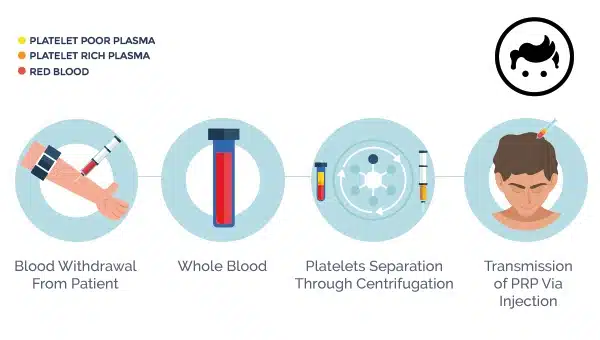
PRP may support scalp healing and follicle activity in suitable patients. Its benefits vary depending on the cause of hair loss, the stage of thinning, the patient’s health, and whether PRP is used alone or alongside other treatments.
If your hair loss is sudden, unusual, or connected to a medical issue, identifying the cause should come before treatment. You can learn more in our guides on causes of hair loss and illnesses that cause hair loss.
PRP can also be used as a supportive treatment around hair transplant surgery. When a patient undergoes a FUE hair transplant, PRP may be used to support graft handling, scalp healing, or post-operative recovery depending on the clinic’s protocol.
At HWT Clinic, hair transplant planning is separated into two key phases: FUE extraction and, when suitable, DHI hair transplant implantation. PRP does not replace these surgical techniques, but it may support the healing environment around them.
For post-operative care timing, medication use, and healing support, review our guide on post-op medications after hair transplant.
PRP results are not permanent and usually require a treatment course followed by maintenance sessions. The ideal schedule depends on the patient’s hair loss stage, diagnosis, response to treatment, and medical plan.
Patients should not expect instant regrowth. Hair treatments generally require patience and follow-up. If you are recovering after surgery, the full growth cycle is explained in our hair transplant recovery timeline.
The cost of PRP hair treatment varies depending on the country, clinic, number of sessions, PRP preparation system, and whether it is combined with other treatments. In many countries, PRP is charged per session, while some clinics include it as part of a broader hair restoration or post-operative support plan.
Patients comparing PRP and hair transplant options should evaluate not only price, but also diagnosis, expected benefit, doctor supervision, treatment frequency, and long-term maintenance. If you are comparing surgical options, our Turkey hair transplant packages guide explains how procedure cost, graft planning, hotel, transfers, and aftercare are evaluated together.
| Feature | PRP Treatment | Hair Transplant (FUE/DHI) |
|---|---|---|
| Type | Non-surgical supportive treatment | Surgical procedure |
| Best For | Early-stage thinning or weak native hair | Advanced baldness, receding hairline, or bald crown |
| Recovery | Usually minimal downtime | Visible recovery usually takes 7 to 14 days |
| Permanence | Requires repeated sessions and maintenance | Transplanted hair is usually long-lasting when planned correctly |
PRP is generally more suitable when follicles are still active but weak. A hair transplant becomes more realistic when an area has already lost significant density or when the hairline, temples, or crown need surgical restoration. Our guide on whether a hair transplant is permanent explains why transplanted follicles usually remain long-lasting after surgery.
If you are unsure whether you need PRP, medication, or surgery, your doctor may evaluate your hair loss stage, donor capacity, medical history, and scalp condition. Our how many grafts do I need guide can help you understand how surgical planning begins when transplant becomes necessary.
PRP and stem cell treatment are often discussed together, but they are not the same. PRP uses platelet-rich plasma from the patient’s blood, while stem cell treatment may involve different biological preparation methods depending on the clinic and protocol.
Both treatments are usually considered supportive options rather than direct replacements for a hair transplant in areas where follicles are no longer active. The right choice depends on diagnosis, expectations, safety, and medical suitability.
PRP is generally well tolerated when performed by qualified medical professionals, but temporary side effects can occur. These may include redness, swelling, mild tenderness, bruising, or sensitivity at the injection sites.
PRP may not be recommended for patients who are pregnant or breastfeeding, using blood thinners, undergoing cancer treatment, have certain blood disorders, or have active infection in the treatment area. Always consult a qualified specialist before beginning any hair loss treatment.
If PRP is used after a hair transplant, it should be timed correctly and should not replace your clinic’s recovery instructions. For recovery concerns such as shedding, sensitivity, or delayed growth, review our guides on shock loss after hair transplant and hair transplant recovery timeline.


You are just one step away from getting a completely free medical analysis.
Close windowWhich image best describes your current hair loss? Or use Voice Input.
Your age helps us determine the stability of your donor area.
At your age (18-23), hair loss is likely still progressing. We highly recommend preventative medical treatments.
Get Info on TreatmentsHave you ever had a hair transplant before?
Do you have any of the following health conditions?
Calculating graft density and hairline design.
Estimated Graft Need
🏆 Highly Recommended: VIP
We strongly recommend the VIP Package as it includes sedation/anesthesia, ensuring a completely comfortable and painless procedure.
📸 Please prepare these 3 photos for the doctor (Front Area, Top Crown, Back Donor):