



While hair restoration is a safe and effective procedure, understanding the potential hair transplant side effects is essential for any patient wanting to make an informed decision. According to the National Library of Medicine, complications are extremely rare due to the scalp’s strong blood supply, which promotes quick healing. However, it is vital to know what is normal during your recovery and when to seek medical advice.
Most complications are self-limited and managed with simple care. If you are comparing clinics, techniques, medical standards, and aftercare expectations, our Turkey hair transplant safety guide explains what patients should know before booking a procedure. The most common side effects include swelling, temporary numbness, and mild pain. Below is the most comprehensive, medically-backed guide to the 15 side effects you might experience.
Immediate bleeding is common shortly after the procedure due to the trauma of instruments making micro-incisions. Delayed or continuous bleeding is rare and usually indicates a damaged vessel or issues with clot breakdown. The severity depends on the extraction technique (FUE vs. FUT). Dr. Jerry Cooley, a specialist in this field, notes that minimizing trauma during extraction significantly reduces bleeding risks.
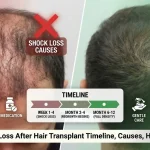
Known as shock loss after hair transplant (telogen effluvium), this affects approximately 10-15% of cases. It involves the temporary shedding of both transplanted and native hair follicles due to physical stress from the surgery. Most follicles remain intact under the skin, and new growth typically begins within 2 to 3 months. Understanding your hair loss stage through the Norwood Scale can also help surgeons plan the procedure more accurately.
Itching is a very normal part of the healing process after a hair transplant. It occurs as hair follicles repair and new hairs begin to push through the skin. Dr. Robert Bernstein, a renowned hair restoration surgeon, emphasizes that while itching is common, scratching the recipient area can dislodge grafts. It must be managed with prescribed saline sprays or gentle shampoos. Following the correct hair washing after transplant routine helps reduce irritation without harming the grafts.
Infections on the scalp (such as folliculitis or cellulitis) occur when bacteria enter the incision sites. This is usually caused by poor hygiene, improper aftercare, or contaminated instruments. Dr. Norman Orentreich’s foundational research showed that with proper post-operative care and a sterile clinical environment, the infection rate remains below 1%.
It is common for the forehead and eyelids to swell two to six days after surgery. This is caused by edema (fluid accumulation) from the local anesthesia injected into the scalp. Dr. Raymond Konior notes that this facial puffiness peaks around the third day and resolves independently within a week. It is a temporary side effect of the body’s natural inflammatory response.
Numbness is a very common side effect, especially after Follicular Unit Extraction (FUE). The scalp is injected with local anesthesia, causing it to feel tingly or completely numb. This sensation can last from a few hours to several weeks as the superficial nerve endings on the scalp regenerate.
Pain ranges from mild tightness to throbbing discomfort, usually experienced at the donor area (the back of the head). Incisional pain is an expected part of the recovery process. However, it is easily managed with prescribed painkillers, and most patients report zero pain by day three or four. If pain is one of your main concerns, you can also read our guide on whether a hair transplant is painful.
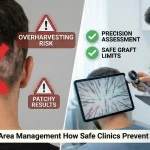
Scarring is an unavoidable side effect, but its visibility depends entirely on the technique. The traditional strip method (FUT) results in a linear scar. However, modern FUE involves using micro-punches with a small diameter, resulting in tiny, scattered circular scars that are easily hidden even with short hair. Proper donor area management is essential to avoid visible thinning, patchiness, or overharvesting in the donor zone.
Hiccups are a surprising but documented side effect of hair transplants. It is assumed that the medications used during surgery (such as steroids) or the agitation of nerves around the scalp can irritate the phrenic nerve, sparking contractions in the diaphragm. They usually resolve within 24 to 48 hours.
Cysts are closed sacs filled with fluid that can form under the skin (epidermoid or sebaceous cysts). They are a rare complication, often occurring if multiple hairs try to grow out of a single incision site or if there is an ingrown hair. They are typically treated with warm compresses or a quick clinical drainage.
Tension headaches are common and are usually caused by the physical stress of lying in one position for hours during the surgery, combined with the swelling and tightness of the scalp as the anesthesia wears off.
Dizziness is typically a response to the sedatives or local anesthesia used during the procedure, or a result of mild dehydration on the day of surgery. Resting and staying hydrated usually resolves this quickly.
Chest pain is an uncommon side effect. If experienced, it is rarely related to the scalp procedure itself but may be a stress-induced reaction or related to underlying health issues. It should always be monitored by a medical professional immediately.
Rare edema can sometimes cause fluid to pool in the extremities. While uncommon, it is a physiological response to the fluids administered during the long surgical session and should be reported to your doctor.
Hair transplant surgery itself does not cause sexual dysfunction. However, medications often prescribed after surgery to stop further hair loss (such as Finasteride) can cause temporary changes in libido. This is a side effect of the medication, not the surgical procedure. You can learn more about common prescriptions and aftercare support in our post-op medications after hair transplant guide.
| Technique | Primary Side Effects | Healing Characteristics |
|---|---|---|
| FUE (Follicular Unit Extraction) | Minor swelling, itching, temporary shock loss. | Faster healing, minimal circular scarring, less nerve damage. |
| FUT (Follicular Unit Transplantation) | Higher pain risk, linear scarring, longer period of numbness. | Requires sutures, more invasive, higher risk of tension headaches. |
If your concern is not normal healing but an unnatural hairline, overharvested donor area, poor density, visible scarring, or a previous failed procedure, review our hair transplant repair Turkey guide to understand how revision cases are evaluated.
Technique choice can also influence the level of trauma in the recipient area. If you are comparing implantation methods, our DHI vs Sapphire FUE guide explains how channel-opening and direct implantation differ in terms of precision, bleeding, and native hair protection.
To ensure a safe outcome and avoid severe complications, patients should understand both clinic selection and aftercare discipline. Before booking, review the most important hair transplant Turkey red flags so you can avoid unsafe providers and unrealistic promises.
Success rates are generally high, with 90-95% of grafted hair remaining in good condition. Patient satisfaction scores are overwhelmingly positive, provided the patient adheres strictly to the recovery timeline and aftercare instructions.
The surgery itself is relatively painless due to local anesthesia. Most patients only experience mild tightness or itching afterward, which is easily managed with standard over-the-counter pain medication.
If you want a realistic medical assessment and a procedure that follows the highest clinical standards to minimize side effects, start by reviewing our transparent hair transplant packages in Turkey.
Contact our medical team via WhatsApp to get started with your personalized consultation.


You are just one step away from getting a completely free medical analysis.
Close windowWhich image best describes your current hair loss? Or use Voice Input.
Your age helps us determine the stability of your donor area.
At your age (18-23), hair loss is likely still progressing. We highly recommend preventative medical treatments.
Get Info on TreatmentsHave you ever had a hair transplant before?
Do you have any of the following health conditions?
Calculating graft density and hairline design.
Estimated Graft Need
🏆 Highly Recommended: VIP
We strongly recommend the VIP Package as it includes sedation/anesthesia, ensuring a completely comfortable and painless procedure.
📸 Please prepare these 3 photos for the doctor (Front Area, Top Crown, Back Donor):