



Entering your fifties should be a period of stability, yet dealing with ongoing hair loss can lead many men to believe that the window for cosmetic restoration has closed. Medically speaking, this is not always true. Mature men can be strong candidates for surgery because their hair loss patterns are often more stable and predictable. However, older patients require a different surgical strategy than younger men. When mature patients begin researching options for a professional hair transplant in Turkey, they need a clinic that prioritizes medical integrity, safety, donor protection, and conservative design. In this guide, we explain why your fifties may be a suitable time for surgery, how candidacy is determined, and how doctors protect your long-term appearance.
To understand why age can be a strategic advantage in hair restoration, we need to examine how male pattern baldness behaves over the decades.
Androgenetic alopecia, also known as genetic hair loss, is often more aggressive and unpredictable in the twenties and thirties. By the time a patient reaches 50, the trajectory of hair loss has usually slowed down and become easier to evaluate.
This stability can be a surgical advantage. Because the loss zone is more clearly defined, the surgeon is not trying to guess where your hairline will recede next. Understanding your stage on the Norwood Scale at 50 allows the medical team to create a more realistic, long-term plan with a lower risk of native hair rapidly falling out behind the newly implanted grafts.
Your donor area—the finite ring of hair at the back and sides of your scalp—is your most valuable asset. Unlike younger patients who may be tempted to use too many grafts for a low, dense hairline, mature patients usually benefit from strategic allocation.
At this age, calculating the optimal number of grafts is focused on creating age-appropriate density while preserving enough donor capacity for the future. Proper donor area management is especially important because the donor supply is limited and must be distributed carefully between the frontal hairline, mid-scalp, and crown.
For men over 50 with advanced thinning, the goal is often not to restore every square centimeter at maximum density. Instead, the strongest visual improvement usually comes from rebuilding the frontal frame and mid-scalp first. If the crown is also affected, doctors may recommend conservative coverage or staged planning. You can read more about this in our crown area hair transplant guide.
Chronological age does not automatically disqualify you from a hair transplant. However, your physiological health determines your candidacy. To proceed safely, patients over 50 must meet specific medical criteria:
Patients should also understand the normal healing process and possible temporary symptoms after surgery. Our guide on hair transplant side effects explains what is usually expected during recovery and which symptoms should be reported to the medical team.
For mature patients, safe technique matters as much as the number of grafts. At HWT Clinic, the procedure is planned in two separate phases:
Natural-looking results also depend on how density is planned. Our guide on hair transplant density explains why coverage should be based on donor capacity, hair thickness, blood supply, and placement strategy rather than simply using the highest possible graft count.
The medical tourism market is unfortunately crowded with commercial brokerages that may accept patients without properly reviewing age, medical history, donor capacity, or medication risks. This lack of screening is one of the most critical common red flags of unregulated clinics.
HWT Clinic is not an agency. We are a fully licensed, 2,500 m² medical polyclinic operating in Istanbul. Every procedure is performed in our own facility, led by our in-house doctors, alongside a dedicated anesthesiology team to support comfort and safety for mature patients. If your medical profile presents a risk, the correct decision may be to delay or avoid surgery. Your safety, your donor area, and the lifelong survival of your transplanted hair must come before short-term cosmetic goals.
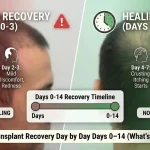
Recovery after a hair transplant in your 50s generally follows the same biological timeline as it does for younger patients, but medical history, medications, circulation, and healing speed should be considered carefully. Patients should follow all aftercare instructions, protect the grafts, avoid trauma, and attend scheduled photo follow-ups after returning home.
For a full overview of the healing stages, you can review our hair transplant recovery timeline.
There is no strict chronological age limit for hair restoration. Men in their 50s, 60s, and beyond may be suitable candidates if their overall health, donor area quality, and expectations are appropriate. Candidacy is determined by medical assessment, not age alone.
Yes, 50 can be a good age for a hair transplant in suitable patients. By this age, male pattern baldness is often more stable and predictable than it is in younger patients, allowing doctors to design a more realistic long-term restoration plan. However, the final decision depends on medical health, donor capacity, and treatment goals.
Yes, it can look natural when designed correctly. A skilled surgeon should avoid creating an aggressively low or straight teenage hairline on a mature patient. A slightly conservative, age-appropriate hairline with natural density usually blends better with facial structure and age.
Restoring your hair after 50 can be an investment in confidence and well-being. It requires a careful medical approach, realistic planning, donor management, and a strong commitment to patient safety. HWT Clinic provides mature patients with doctor-led hair restoration in a fully equipped medical facility. Contact our expert team today for a comprehensive evaluation of your hair loss.




You are just one step away from getting a completely free medical analysis.
Close windowWhich image best describes your current hair loss? Or use Voice Input.
Your age helps us determine the stability of your donor area.
At your age (18-23), hair loss is likely still progressing. We highly recommend preventative medical treatments.
Get Info on TreatmentsHave you ever had a hair transplant before?
Do you have any of the following health conditions?
Calculating graft density and hairline design.
Estimated Graft Need
🏆 Highly Recommended: VIP
We strongly recommend the VIP Package as it includes sedation/anesthesia, ensuring a completely comfortable and painless procedure.
📸 Please prepare these 3 photos for the doctor (Front Area, Top Crown, Back Donor):