


For whatever reason, the problem of hair loss is quite frustrating. Preventing and eliminating hair loss can be very challenging at times. The good news is that you can support your hair health by supplementing with the right vitamins and minerals. Just like any other part of your body, your scalp and hair follicles need deep nourishment from the inside out to stay healthy and shiny.
There is solid evidence that specific vitamins really do help keep hair healthier and reduce shedding. For example, Vitamin B boosts blood circulation to the scalp, Vitamin D stimulates dormant hair follicles, and Vitamin E provides an antioxidant protective barrier. While they are not “miracle cures,” correcting a deficiency can lead to thicker hair and improved growth over several weeks or months.
If you are seeking ways to stop hair loss, here are the most effective nutrients you should include in your diet or supplement regime under medical supervision:
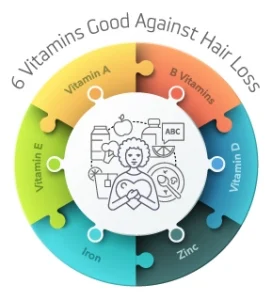
The B-complex family is vital for energy production and creating the proteins required for hair growth. One of the biggest causes of hair loss is the lack of Biotin (B7). It is essential for fatty acid metabolism and strong tissue repair. Other key B vitamins include:
Vitamin D helps maintain the thickness of hair strands by stimulating the follicles. A deficiency is strongly linked to Alopecia areata. While it can be obtained from the sun, many people in sunny climates still suffer from low levels. Oily fish, eggs, and mushrooms are good food sources, but supplementation is often necessary.
All cells need Vitamin A for growth. It helps the scalp produce sebum, which keeps the hair moisturized and healthy. However, balance is key: while a deficiency leads to dry hair, too much Vitamin A can lead to toxicity and actually cause more hair loss. Abundant in orange vegetables like carrots and dark leafy greens.
Known for its antioxidant properties, Vitamin E reduces oxidative stress and free radical damage that breaks down hair follicle cells. It adds a protective oily layer to the hair cuticles, restoring shine and reducing frizz. Find it in nuts, sunflower seeds, and broccoli.
Zinc plays a key role in the growth and repair of hair tissue and ensures the sebaceous glands around the follicles work correctly. Studies show that men with androgenetic alopecia often have lower zinc levels. It is mostly found in animal proteins, whole grains, and legumes.
Iron helps red blood cells carry oxygen to your cells. This makes it an essential mineral for many bodily functions, including hair growth. Iron deficiency (anemia) is a major cause of female pattern hair loss. Red meat, chicken, and leafy green vegetables are excellent sources.
Vitamin deficiencies often present visible symptoms beyond hair thinning:
It is always recommended to get a simple blood test before starting high-dose supplements to ensure you are targeting the right area.
While eliminating vitamin deficiencies is crucial, it may not be enough for those suffering from permanent genetic hair loss. In these cases, combining nutritional support with professional treatments yields the best results. Methods like PRP (Platelet-Rich Plasma) can jumpstart growth, while a Turkey hair transplant provides a permanent solution.
Turkey has become a global leader in hair restoration due to its expert surgeons and competitive pricing. The Turkey hair transplant cost allows patients to access state-of-the-art facilities at a fraction of the price found in the UK or US. At HWT Clinic, we provide comprehensive care that addresses both the surgical needs and the nutritional requirements for long-term hair health.